| From war to waterway control: how the crisis escalated? |
**
UAE Warns Europe: Hormuz Crisis Could Disrupt Energy Supplies and Global Trade
|
UAE warns Europe as Iran asserts control over Hormuz
26/05/2026
(See translation in Arabic section)
Sydney-Middle East Times Int'l: European stakes high: UAE adviser Anwar Gargash warned Europe that any change in Hormuz’s status could seriously disrupt its energy supplies and trade.
Iran’s control claim: Iran’s Persian Gulf Strait Authority asserts oversight over waters claimed by Oman and the UAE, requiring prior authorisation for transit.
Talks in progress: US and Iranian officials report advances in negotiations to reopen Hormuz, though key issues still need to be addressed.
UAE urges Europe to act as Hormuz crisis threatens energy security
Speaking at the GLOBSEC conference in Prague, UAE presidential adviser Dr Anwar Gargash warned that instability in the Strait of Hormuz poses a direct threat to Europe’s energy supply and trade. He urged European governments to view the crisis as a matter of national interest, stressing that any change in the strait’s status could have severe repercussions. Gargash revealed that the UAE had faced over 3,300 missile and drone attacks during the conflict, but maintained that the country’s economic fundamentals remain strong.
"Today, any change in the status of Hormuz will have serious implications on all of Europe. That’s why we’re urging also the Europeans to see this not only as a distant problem, but a problem very much connected with their energy, with their trade."
Iran defends its 'service fees' amid Gulf and US rejection
Iran’s foreign ministry clarified that it is charging ships for navigational and environmental services in the Strait of Hormuz, not imposing transit tolls. The Persian Gulf Strait Authority’s map claims extend into UAE and Omani waters, prompting Gulf states to formally reject the route as a violation of international law. US Secretary of State Marco Rubio called any toll system ‘unacceptable,’ while Iran maintains it has the legal right to regulate passage through its territorial waters.
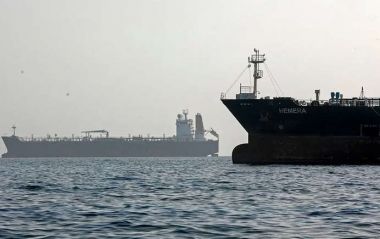
From war to waterway control: how the crisis escalated?
The current dispute follows Iran’s closure of the Strait of Hormuz after US-Israeli strikes, disrupting a route that carries one-fifth of global oil. Tehran’s establishment of the Persian Gulf Strait Authority and its control map marks a shift from contested waters to a state-administered permit system. While Oman, a UNCLOS signatory, guarantees transit passage, Iran has not ratified UNCLOS and now demands prior authorisation for all transits. WION
Negotiations and uncertain outcomes
US President Donald Trump described a deal with Iran to reopen the Strait of Hormuz as ‘largely negotiated,’ while Iranian spokespeople stressed that agreements on several topics have been reached but final consensus is pending. Discussions have included issues such as unfreezing Iranian assets and defining ceasefire terms in Lebanon. Officials from both sides have acknowledged progress without setting a timeline for concluding the talks. |









.jpg)