| AFIC Condemns Coalition’s Divisive Immigration Policy as Dangerous Shift Toward Politics of Exclusion |
** "A firm rejection of the new immigration policy: The Australian
Federation of Islamic Councils sounds the alarm about social
disintegration."
|
AFIC Condemns Coalition’s Divisive Immigration Policy as Dangerous Shift Toward Politics of Exclusion
15/04/2026
See translation in Arabic section)
Sydney-Middle East Times Int'l: The Australian Federation of Islamic Councils (AFIC) expresses its strongest opposition to the Coalition’s proposed immigration policy. This is a deeply divisive and dangerous departure from Australia’s longstanding approach to migration.
This is a deliberate attempt to recast migration as a cultural and ideological threat, and to divide migrants into categories of “acceptable” and “suspect” based on vague and politicised notions of “values.” It is anything but a serious or necessary reform agenda.
At its core, this policy seeks to move the national conversation away from migration as nation-building and toward migration as a tool of fear, exclusion and political signalling.
AFIC is particularly concerned by the language underpinning these proposals. The repeated framing of migrants as either contributors or “subversive”, as either aligned or deficient in “Australian values”, creates a moral hierarchy of belonging. It sends a clear message that some communities will be required to constantly prove their legitimacy, loyalty and right to remain.
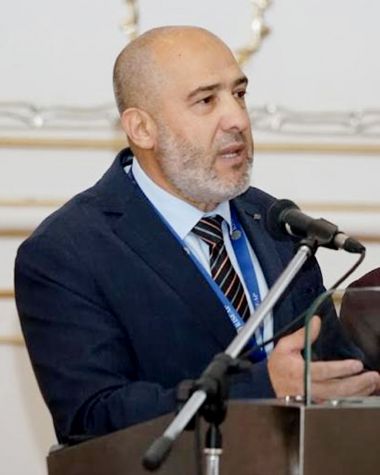
“This is not about policy detail, it is about the framing of entire communities as inherently suspect,” said AFIC President Dr Rateb Jneid.
AFIC warns that such rhetoric does not exist in a vacuum. It shapes public attitudes, legitimises suspicion, and creates the conditions in which discrimination and exclusion can take root.
The proposal to single out Palestinian arrivals for reassessment is particularly alarming. These are individuals who have already undergone extensive security vetting. To now place them under renewed scrutiny is a political decision that risks stigmatising a traumatised and vulnerable population.
“This approach takes people who have already suffered immense loss and turns them into a political test case,” Dr Jneid said.
AFIC also notes that Australia already possesses extensive migration powers, including broad character and visa cancellation provisions. The issue is not a lack of authority, but how that authority is being framed and applied.
What is about intensifying the discretionary and ideological use of power in a way that risks disproportionately impacting minority communities, particularly Muslims and other racialised groups.
This policy reflects a clear shift toward a more extreme political position, driven not by national interest but by competition with far-right narratives that seek to weaponise migration for electoral gain.
Australia must resist attempts to normalise this approach.
Migration policy must be grounded in fairness, consistency and the rule of law, not in vague tests of belonging or ideological conformity.
AFIC calls on all political leaders to reject this framing and to ensure that migration policy remains focused on inclusion, dignity and equal treatment under the law.
________________________________________
AFIC, established in 1964, stands as the Peak Muslim Organisation in Australia, with 170 members including 9 State and Territory Councils. It has a rich history of pioneering numerous community services and actively advocating for the rights and representation of the Muslim community.
Authorised:
Dr Rateb Jneid, President |