|
|
|
| Australia on Alert: Government Moves to Shield Nation from Global Crisis as Cyclone and War Pressures Mount |
|
Severe Tropical Cyclone Narelle; Middle East Conflict; Fuel Supply.
Sydney-Middle East Times Int'l: Australia is confronting a convergence of domestic and international challenges, with the federal government stepping up efforts to protect the nation from the dual pressures of a severe tropical cyclone and an escalating global conflict impacting fuel supply and cost of living. At a press conference in Canberra, Prime Minister Anthony Albanese and Minister for Climate Change and Energy Chris Bowen outlined a coordinated national response aimed at ensuring stability during an increasingly uncertain period.
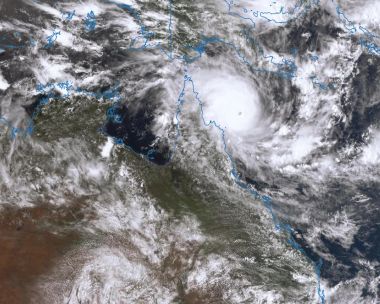
Severe Tropical Cyclone Narelle, currently a Category 4 system, is battering Western Australia’s Pilbara and Gascoyne regions, compounding the strain already felt in northern parts of the country still recovering from recent flooding. The Prime Minister emphasised the importance of community resilience and adherence to emergency guidance, while reaffirming federal support for affected regions.
At the same time, Australia is grappling with the economic and logistical consequences of the ongoing conflict in the Middle East, which continues to disrupt global energy markets and place pressure on supply chains. The government has convened multiple meetings of the National Security Committee of Cabinet since the conflict began, reflecting the seriousness of the situation.
“This war is real. This war is having an impact on Australians, like it’s having an impact right around the world,” Mr Albanese said, underscoring the interconnected nature of global crises and their domestic consequences.
A central concern remains fuel security. While the government has moved swiftly to secure alternative supplies following cancelled shipments, authorities acknowledge that prolonged instability could deepen economic pressures. Six shipments of jet fuel are expected to arrive in Australia in the coming days, with further imports arranged to stabilise supply levels.
Minister Bowen provided detailed figures demonstrating increased fuel distribution across the country, particularly in regional areas where shortages have been most acute. Despite the surge in demand, he noted that supply volumes are rising significantly, with some regions experiencing increases of more than 40 per cent compared to previous levels.
“For the next few weeks, Australia’s supply of petrol and diesel and oil will be the same, if not higher, than it normally would be,” Mr Bowen said, offering reassurance amid widespread concern about availability.
However, both leaders acknowledged that supply alone does not fully address the pressures facing households and businesses. Rising fuel costs, driven largely by global oil prices, continue to affect families, farmers and small enterprises, particularly in regional communities where access remains uneven.
The government’s strategy has focused on maintaining supply while avoiding reactive policy decisions that could undermine long-term stability. This includes resisting calls from the opposition to immediately cut fuel excise, with ministers arguing that such measures must be considered carefully within broader economic frameworks.
In addition to securing fuel imports, the government has taken unprecedented steps to manage reserves and adjust fuel standards to increase available supply. Some of these decisions, Mr Bowen noted, would normally take months or even years to implement but have been fast-tracked in response to the crisis.
“We’ve made some very big calls… decisions that would normally take 18 months done in three or four days,” he said, highlighting the urgency and scale of the government’s response.
Beyond immediate supply concerns, the government is also preparing for longer-term disruptions. The Prime Minister announced that National Cabinet will reconvene to strengthen coordination between federal, state and territory governments, drawing lessons from the COVID-19 pandemic to ensure a unified national approach.
“A global crisis needs a national response,” Mr Albanese said, stressing the importance of collaboration across jurisdictions and with industry stakeholders.
International diplomacy is also playing a critical role. Australia has engaged closely with regional partners, including Malaysia and ASEAN nations, to secure fuel supplies and reinforce economic cooperation. These relationships, built over recent years, are proving vital in navigating the current crisis.
At the same time, the government has maintained its alliance with the United States while calling for de-escalation in the Middle East. Mr Albanese reiterated Australia’s opposition to the Iranian regime’s actions but emphasised the need for an end to hostilities, given the global economic fallout.
Domestically, the government faces mounting scrutiny over communication and coordination, particularly regarding fuel availability in regional areas. While acknowledging these challenges, ministers defended the current approach, noting that data collection and distribution logistics are shared responsibilities between states and the Commonwealth.
As Australians brace for continued uncertainty, the government’s message remains one of preparedness and resilience. Efforts are focused not only on managing immediate impacts but also on strengthening systems to withstand further shocks.
The coming weeks will be critical, as the trajectory of both the cyclone response and the global conflict becomes clearer. For now, authorities are urging calm, cooperation and vigilance, as Australia navigates one of the most complex periods in recent years—where natural disasters and geopolitical tensions intersect to test national resilience.
|
|
|
|
|
|