|
|
|
| For weeks, the Strait of Hormuz—a narrow but critical maritime passage linking the Persian Gulf to the world... |
** "In times of crisis, strength lies not just in firepower, but in the unity of nations."
|
Securing the Strait of Hormuz: A Global Test of Resolve and Cooperation18/05/2026 (See translation in Arabic section)
Sydney-Middle East Times Int'l: Amid escalating tensions and economic turmoil, the UK-led coalition marshals warships, jets, and intelligence assets to reopen the strategically vital Strait of Hormuz—demonstrating the power of coordinated action in a fractious world.
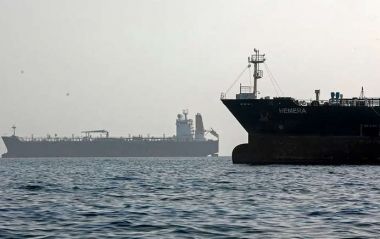
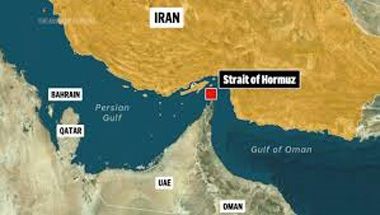
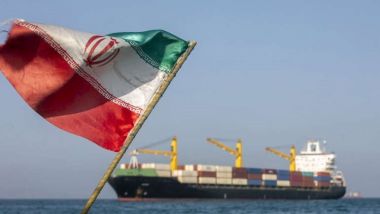
For weeks, the Strait of Hormuz—a narrow but critical maritime passage linking the Persian Gulf to the world—has stood at the center of a global crisis. Blocked by Iranian forces and punctuated by repeated attacks on commercial vessels, the strait has sent shockwaves through energy markets, disrupted supply chains, and tested the limits of international diplomacy. In response, the United Kingdom, in partnership with France and over 40 allied nations, is orchestrating a high-stakes multinational mission to restore free navigation. The operation blends military power with strategic coordination, signaling to Tehran and the world that safeguarding global trade and energy security is a shared responsibility.
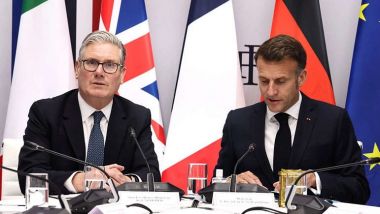
Preparations are already underway for the operation, which will see the deployment of warships, Typhoon jets, mine-hunting equipment, and advanced counter-drone systems to the Middle East. Announced last month by UK Prime Minister Keir Starmer and French President Emmanuel Macron, the mission is designed to clear mines, secure merchant vessels, and restore safe passage for global maritime traffic. The Strait of Hormuz carries over a fifth of the world’s oil, making its closure a severe economic and geopolitical shock. Since March, Iran has imposed a blockade on the waterway, with both the US and Israel implicated in military strikes that have intensified the standoff. Energy prices have surged worldwide, while supply chains—particularly in Asia and the Middle East—have been heavily disrupted.
Despite a fragile month-old ceasefire between the US and Iran, both nations continue to accuse each other of attacks on vessels transiting the strait. Retired Brigadier and military analyst Ben Barry stressed that Iran remains a potent threat to any international operation. “This is not risk-free,” Barry said. “To make this work, you need a large, coordinated force, rather than hundreds of personnel.” He emphasized the need for thousands of personnel equipped with a full spectrum of modern weapons—including anti-surface, anti-aircraft, and missile defense systems—supported by extensive intelligence, surveillance, and reconnaissance capabilities.
The UK and France are actively coordinating with international partners to assemble a robust coalition. More than 40 nations, including Germany, Italy, New Zealand, Canada, South Korea, Australia, and Iraq, participated in the mission’s first defence ministers’ meeting. France has deployed its nuclear-powered aircraft carrier, Charles de Gaulle, while Australia has contributed a high-tech surveillance plane. The Ministry of Defence highlighted the importance of pooling expertise from each nation to ensure a comprehensive approach.
Iran, however, has issued stern warnings against foreign military presence in the strait. Deputy Foreign Minister Kazem Gharibabadi stated that any warship entering the waters “will be met with a decisive and immediate response,” signaling the potential for escalation if hostilities resume. The UK has clarified that the mission will only proceed once the ceasefire holds and conditions allow for a coordinated, multinational effort. This cautious approach underscores the delicate balance between enforcing maritime security and avoiding direct confrontation.
The mission reflects the complexity of modern coalition operations. Analysts note that reopening the strait will require more than ships and aircraft; it demands a multidimensional strategy combining mine clearance, air and naval surveillance, drone defense, and the capacity to strike hostile forces if necessary. Iran retains cruise missiles, artillery, and drones capable of threatening commercial shipping, particularly in the northern section of the strait. Any breakdown of the ceasefire could immediately place coalition forces in harm’s way, requiring rapid and decisive responses.
Beyond military considerations, the operation carries profound geopolitical and economic implications. The Strait of Hormuz is not only a critical energy corridor but also a symbol of international maritime governance. Its closure has already driven global energy prices higher, affecting households and industries alike. By acting in unison, the UK, France, and allied nations are signaling that coordinated action will maintain freedom of navigation, stabilize markets, and protect international trade routes.
The scale of the mission illustrates the growing reliance on multilateral cooperation to address global security challenges. While the UK and France lead the operation, success hinges on collective contributions from allied nations, each providing specialized capabilities and resources—from warships with anti-surface and anti-aircraft defenses to intelligence and reconnaissance aircraft. The coalition is assembling a comprehensive security package designed to deter aggression and maintain stability.
Analysts suggest the operation also reflects broader trends in international security. The post-pandemic era has highlighted the vulnerability of global supply chains and the interdependence of nations during crises. In this context, the Strait of Hormuz represents a critical test of coalition capabilities, diplomacy, and strategic planning. Its reopening could reinforce international maritime law norms and demonstrate the ability of nations to collaborate in the face of regional threats.
As preparations continue, the coalition is expected to engage in further planning exercises and joint training to ensure readiness. Discussions with allies have emphasized integrating air, sea, and intelligence assets to create a layered defense capable of responding to any escalation. While exact troop numbers and force composition remain classified, analysts agree that thousands of personnel will be required, reflecting the mission’s seriousness and complexity.
The operation also demonstrates the interplay between diplomacy and military strategy. By coordinating closely with allies and ensuring widespread international support, the UK and France aim to reduce the risk of unilateral escalation while signaling to Iran and other regional actors that interference carries substantial consequences. Credible deterrence, coordination, and coalition cohesion are just as vital as operational capability.
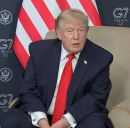
Beyond coalition planning, analysts are increasingly warning that the conflict could escalate far beyond maritime security operations. Speaking to Sky News Australia, The Australian’s Foreign Editor Greg Sheridan argued that any serious attempt by US President Donald Trump to decisively defeat Iran would require “very serious escalation,” potentially involving sustained bombing campaigns and even the seizure of strategic Iranian territory such as Kharg Island, a critical hub for Iran’s oil exports. Sheridan noted there is “no sign that Trump has a taste” for such a large-scale military commitment, underscoring the difficult strategic choices confronting Washington as tensions persist.
His assessment reinforces broader concerns surrounding the Strait of Hormuz mission. While allied nations seek to restore maritime security and deter attacks on commercial shipping, any direct military confrontation with Iran carries the risk of triggering a much wider regional conflict. Analysts warn that even limited engagements could rapidly spiral into retaliatory missile strikes, cyberattacks, and disruptions to global energy infrastructure, further destabilizing already volatile international markets.
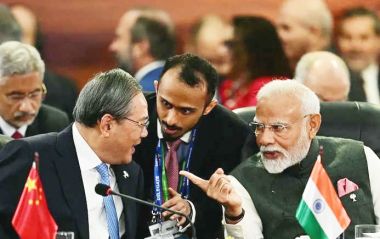
While the UK-led coalition mobilizes to secure the strait, the broader global response exposes the limitations of other international actors. BRICS—a bloc including Brazil, Russia, India, China, South Africa, and now expanded to include Iran, the UAE, and Saudi Arabia—has largely remained silent, revealing structural constraints in mounting a coordinated response.
Iranian leaders had called on India, the current BRICS chair, to mediate, but Pakistan ultimately assumed the role. This muted reaction highlights a gap between BRICS’ growing ambitions and its capacity to act decisively during crises.
Individual BRICS members have pursued selective national interests: India facilitated safe passage for certain ships, while China and Russia blocked a UN Security Council resolution that would have authorized defensive force. The bloc functions more as an informal forum—akin to the G7—than as a structured multilateral organization, prioritizing national agendas over coordinated action. While expectations for BRICS have grown among Global South nations seeking greater influence, its consensus-driven, leader-dependent model limits its effectiveness in acute crises.
The ongoing conflict in Iran, sparked by US and Israeli military strikes, has had far-reaching humanitarian and economic consequences. Civilian populations in Iran and Lebanon have suffered casualties, while Israeli cities have also been hit by missile attacks. Economically, fuel prices in the Philippines have more than doubled, LPG shortages in India are forcing migrant workers to leave cities, food prices in the Gulf have surged, and the risk of a US recession within a year is approaching 50 percent. Global food security is under threat as the closure of the Strait of Hormuz disrupts fertilizer and energy supplies essential to agriculture worldwide.
At the same time, the crisis has intensified a parallel battle over narratives and public perception. Iranian Human Advocate and Ryde Councillor Tina Kordrostami recently criticized reports of an Australian man relocating to Iran and hosting what she described as a strongly anti-Western podcast aligned with Iranian regime narratives. Speaking to Sky News Australia, Kordrostami condemned what she viewed as selective outrage that ignores the realities of repression within Iran itself.
“This man talks about oppression so much in his podcast … and the hypocrisy is clear for us all to see,” she said. Kordrostami argued that oppression in Iran extends to severe restrictions on women’s rights, religious freedom, and political choice, adding that narratives sympathetic to the regime often overlook the experiences of ordinary Iranians living under systemic repression.
The controversy highlights how the broader confrontation surrounding Iran is increasingly being fought.
The next BRICS leaders’ summit in India may shift attention from the immediate crisis in the strait to broader economic challenges. Yet the ongoing war in Iran underscores the high stakes for Southern powers and the limitations of loosely structured alliances when faced with sudden crises. In contrast, the UK-led coalition demonstrates the potential of structured, multilateral action that combines diplomacy with credible military capability to confront regional threats.
Ultimately, the UK-led multinational mission to reopen the Strait of Hormuz is a landmark operation. It blends military readiness, international cooperation, and strategic diplomacy, highlighting both the enduring threats posed by Iran’s capabilities and the capacity of global powers to work together in securing critical maritime routes. The strait is more than a commercial artery; it is a geopolitical touchstone, testing the resolve, coordination, and strategic acumen of allied nations. Success will depend on meticulous planning, extensive collaboration, and the ability to project a credible deterrent that stabilizes energy markets, protects global trade, and prevents escalation in an already volatile region.
In a world increasingly defined by interdependence, the mission underscores a fundamental truth: security and stability are not achieved in isolation. They require unity, preparation, and the willingness of nations to act collectively when stakes are highest. The Strait of Hormuz, a narrow waterway with global consequences, has become a test not just of military capability, but of international solidarity.
|
|
|
|
|
|