|
|
|
| Damascus Church Massacre: Legitimate Fears That Cannot Be Allayed by Words!!! |
|
Damascus Church Massacre: Legitimate Fears That Cannot Be Allayed by Words!!!
06/26/2025
(See translation in Arabic section)
Sydney-Middle East Times Int'l:
Joseph Al-Qassifi, Head of the Press Editors Syndicate -
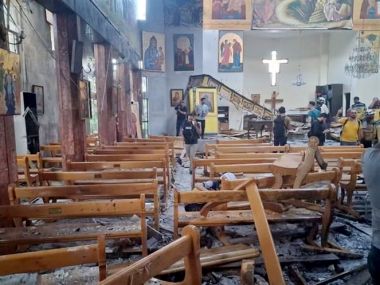
Patriarch John XIV Yazigi's words were eloquent, precise, and expressive during his eulogy for the 27 martyrs who fell in the horrific suicide bombing that targeted the Mar Elias Orthodox Church in Damascus last Sunday. His response to Syrian President Ahmad al-Sharaa's condolences also revealed pent-up anger, especially when he said that condolences were not enough. What did Patriarch Yazigi mean by his words?
In fact, the heads of the Christian denominations in Syria have expressed their fears to their visitors, to the ambassadors of major powers accredited to Damascus, during their visits to the Vatican, and to a number of officials in decision-making capitals, that the transformation Syria has witnessed since the fall of Bashar al-Assad's regime could be the beginning of the end of pluralism and diversity in this country, heralding a gradual exodus of Christians from the country. In this context, no spiritual leader rules out emptying his country of them, because they are peaceful, non-tribal, possess no weapons, and do not have their own parties. They are spread throughout Syria, with all the people, and are not confined to ghettos, which would make it easy to attack and disperse them throughout God's vast lands.
In the opinion of a Christian cleric in Damascus, the fate awaiting Syrian Christians could be similar to that of Iraqi Christians, perhaps not too long ago, if the threats persist, or within a decade at most.
However, the same dangers threaten other minorities in Syria, such as the Alawites and Druze. However, their capabilities to confront them are far greater for demographic reasons and because of the geographical scope that encompasses them within a geographic area that facilitates communication between their cities and villages. This does not mean, in all cases, that they are safe. There have been many analyses and reports about the perpetrator of the Mar Elias Church massacre in Damascus, but the source of ideological extremism is the same: the takfiri ideology that has struck Iraq, Lebanon, and Egypt, and is now preparing to spread to Syria under various pretexts. The Lebanese Army's announcement of the arrest of the "ISIS" emir in Lebanon means that the Lebanese military and security services have decided to preempt any repercussions of events in Syria on Lebanon by further monitoring and uncovering the secret cells of groups that employ terrorism in their operations. The angry response of Christians, which was translated into popular movements in Damascus and Latakia coinciding with the funerals of the 27 martyrs and the chants of condemnation that targeted President Ahmad al-Sharaa, and the sympathy they received from Syrian society across all its spectrums, will find no resonance unless it creates a compelling and organized effort to correct the concept of national partnership in Syria. This can only be achieved by building a civil state. A Syrian Christian activist reports that the only female minister in al-Sharaa's government, Hind Qabwat, does not represent the Syrian Christian community and is not familiar with its suffering. She was imposed by the West following the fall of the regime as a representative of civil society, and her appointment gives the impression that the new government in Syria respects diversity. However, this impression lacks scrutiny. Observers believe that al-Sharaa has tried and continues to try to be a man of the moment, open to all, willing to heed advice received from international and Arab sources. However, he clashes with hardliners even within his own inner circle and faces difficulties in controlling them and curbing their extremist tendencies. His security services are infiltrated by elements linked to takfiri organizations, complicating his work and obstructing his plans. He is surrounded by advisors with diverse interests and tendencies, who have their own foreign connections. This reality harms his role and image. Meanwhile, Christian patriarchs in Damascus are deeply concerned for their flocks, amid a growing wave of young people expressing their desire to emigrate due to their lack of confidence in the future. These same leaders reminded heads of foreign and Arab diplomatic missions how their assurances that the new Syrian government would respect diversity and preserve the security and safety of Christians were in vain. This prompted the Vatican, the Russian Church, and Christian organizations in the United States and Europe to intensify their efforts to prevent the worst and ensure that the repercussions of the church massacre in Damascus do not lead to a dramatic end to the Christian presence in Syria. However, the massacre of the Orthodox Church of St. Elias in Damascus constituted a black spot, and no one knows how the government will proceed to erase it from its record. This could be repeated if it does not take the necessary steps to establish a civil state in Syria, regardless of the cost. Hence, and far from judging intentions, he and his government are under scrutiny. He must resort to courageous, if not surgical, options before it's too late, in order to stabilize matters, starting with a civil constitution that reassures all components and opens the door to a democratic Syria that embraces diversity and pluralism, and embraces modernity with courage and confidence. Without this, Syria will not be able to live in stability.
Al Jamhouria |
|
|
|
|
|