|
|
|
| Oil is becoming Trump's political vulnerability |
** Middle East on a Knife-Edge: Iran, America and the Battle to Control the Next Phase of the War
|
Middle East on a Knife-Edge: Iran, America and the Battle to Control the Next Phase of the War
“The greatest danger is no longer that either Washington or Tehran deliberately chooses an all-out war, but that a confrontation over ships, oil or military bases triggers an escalation neither side can easily stop.”
10 August 2026
(See translation in Arabic section)
Sydney- Middle East Times Int’l: The Middle East has entered another highly dangerous phase, with the confrontation between the United States and Iran increasingly centred on one of the world's most strategically important waterways: the Strait of Hormuz.
Sky News military analysts Sean Bell and Michael Clarke have repeatedly highlighted an important transformation in the conflict. What began as a military confrontation involving strikes against Iranian strategic targets has evolved into something broader: a struggle over freedom of navigation, energy supplies, deterrence and ultimately which side can dictate the political terms of any eventual settlement.
The central battlefield is therefore no longer confined to Iranian territory.
It stretches from the Strait of Hormuz to American military installations across the Gulf, from Israel and Lebanon to Yemen, and into the global energy markets.
The Strait of Hormuz becomes the centre of the conflict
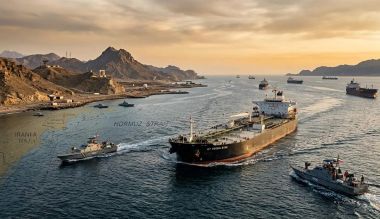
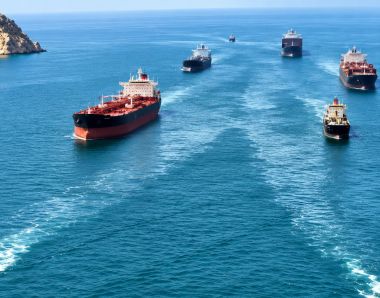
The importance of the Strait of Hormuz cannot be overstated. Roughly one-fifth of global oil supplies normally pass through the waterway, making any disruption an immediate international economic issue rather than merely a confrontation between Washington and Tehran. U.S. officials have demanded that Iran stop attacks on commercial shipping and allow unrestricted passage through the strait, while Tehran has resisted any arrangement that it believes would surrender its strategic leverage over the waterway.
This is precisely where Sky News analysts have focused much of their attention.
Sean Bell has argued that the confrontation over Hormuz is about much more than the movement of tankers. It represents a battle over military credibility. Washington wants to demonstrate that international shipping cannot effectively be held hostage by Iran, while Tehran regards its geographic position beside the strait as one of its most powerful remaining strategic weapons.
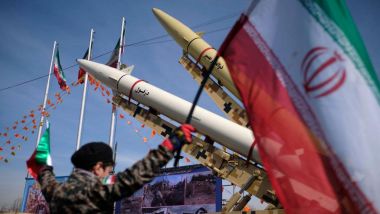
During renewed fighting in July, U.S. forces struck dozens of Iranian targets and deployed one-way attack sea drones alongside aircraft, naval vessels and aerial drones. Iran responded by targeting American military facilities in Bahrain and Kuwait.
The significance of those exchanges was clear: the war had moved beyond a simple U.S.-Iran confrontation and was threatening to pull Gulf states directly into the security consequences of the conflict.
Trump's dilemma: military superiority does not automatically produce political victory
The United States possesses overwhelming conventional military superiority. Yet the central question identified repeatedly in Sky's analysis is whether military power can actually produce Washington's desired political outcome.
President Donald Trump has alternated between threats of overwhelming military force and attempts to reopen negotiations.
In July, after declaring that the previous ceasefire was effectively over, Trump nevertheless said Washington had agreed to Iran's request to continue discussions. Reuters reported that the U.S. simultaneously demanded a clear Iranian commitment to end attacks against shipping in Hormuz.
This apparent contradiction is actually central to Trump's strategy.
He wants Iran to believe that refusing an agreement carries an enormous military cost, while at the same time leaving Tehran an exit through negotiations.
But this strategy also contains considerable risk.
If military pressure becomes too great, Iran may conclude that compromise demonstrates weakness. If Washington reduces pressure too quickly, Tehran may interpret that as evidence that prolonged resistance is succeeding.
The conflict consequently becomes a contest of political endurance as much as military strength.
Iran's strategy: survive, retaliate and increase the cost of war
Iran cannot defeat the United States in a conventional military confrontation.
It does not need to.
Its strategy appears increasingly aimed at surviving the military pressure while demonstrating that continuing the war carries economic and strategic consequences for Washington and its regional partners.
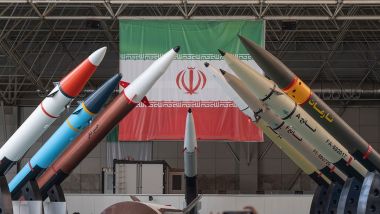
That means retaining the capacity to threaten shipping, launch missiles and drones, impose security costs on American bases and maintain pressure through allied or sympathetic forces around the Middle East.
Sky's Sean Bell described part of this struggle as a “war of narratives”: both sides need to convince their own populations, their allies and their adversary that they remain capable of imposing costs and have not been strategically defeated.
For Iran, simply surviving a sustained American campaign while retaining some retaliatory capability can therefore be portrayed domestically as resistance.
For Washington, however, military operations must eventually demonstrate a tangible political achievement.
That difference creates one of the fundamental asymmetries of the conflict.
Diplomacy has not disappeared
Despite months of warfare and repeated breakdowns in ceasefire arrangements, diplomatic channels remain active.
In late July, the United States and Iran paused attacks as mediators attempted to restore negotiations. Oman has remained an important diplomatic intermediary, while Qatar and other regional states have also sought to prevent further escalation.
By early August, Iran was reportedly approaching an arrangement with Oman concerning shipping through the Strait of Hormuz, although major disagreements with Washington remained unresolved. Associated Press reported that vessel movements had increased but were still substantially below normal levels.
This suggests that neither side currently sees unrestricted warfare as its preferred outcome.
However, diplomacy is operating alongside military coercion rather than replacing it.
That makes every negotiation fragile.
Lebanon remains connected to the broader confrontation
Lebanon remains one of the most sensitive fronts in this regional equation.
The confrontation between Israel and Hezbollah is intimately connected to the broader weakening or survival of Iran's regional network. Any major escalation involving Tehran therefore creates immediate implications for southern Lebanon.
Recent fighting between Israel and Hezbollah has occurred even while negotiations over Lebanon's security arrangements have continued. Associated Press reported in early August that two Israeli soldiers were killed during renewed hostilities, while diplomatic efforts continued over a possible settlement.
The longer-term question is whether Lebanon can finally move toward a security structure in which the Lebanese state and army exercise exclusive authority over decisions of war and peace.
If Iran emerges significantly weakened from its confrontation with the United States and Israel, Hezbollah could face unprecedented strategic pressure.
But attempting to exploit such weakness militarily could have the opposite effect: another devastating Lebanese-Israeli conflict.
Lebanon therefore remains both an opportunity for diplomacy and one of the region's most dangerous potential triggers.
Yemen and the Gulf cannot be separated from Iran
Another warning sign is Yemen.
The Houthis retain the ability to threaten regional infrastructure and maritime routes, extending the geographical reach of instability far beyond Iran itself. Associated Press reported a significant escalation in Yemen in early August, including Houthi attacks that killed more than 30 government troops and affected Saudi territory.
This demonstrates why any analysis focusing exclusively on Tehran and Washington misses the larger strategic picture.
Iran's regional power has historically rested not merely on conventional military capability but on an interconnected network stretching through Iraq, Lebanon and Yemen.
Even if Iran itself suffers major military losses, instability generated through these fronts could continue.
Oil is becoming Trump's political vulnerability
The economic dimension is increasingly important.
On 10 August, Brent crude was trading at about US$84.40 a barrel, with continuing uncertainty over Hormuz contributing to upward pressure on energy prices.
For President Trump, this matters politically.
A prolonged Middle Eastern confrontation that raises petrol prices and global inflation could eventually create domestic political costs, particularly as the United States approaches congressional elections.
Iran understands this.
That is why Hormuz provides Tehran with leverage far beyond its military capabilities.
It does not necessarily need to close the strait completely. Persistent uncertainty, attacks, inspections, shipping delays or threats can increase insurance costs, reroute vessels and keep an embedded geopolitical premium in energy prices.
Three possible scenarios
The first — and currently most plausible — is armed diplomacy.
Under this scenario, Washington and Tehran continue negotiations while maintaining military pressure. Occasional incidents may occur, but both governments attempt to prevent them from becoming a sustained regional war.
The second possibility is a broader negotiated settlement involving Hormuz, sanctions, Iran's nuclear programme and regional security arrangements. This would be far more difficult because these questions strike at the fundamental strategic interests of both countries.
The third and most dangerous scenario is uncontrolled escalation.
A major attack killing large numbers of American personnel, the sinking of a significant commercial or naval vessel, a sustained closure of Hormuz, or a dramatic Israeli-Iranian exchange could force political leaders into retaliation even if neither side initially wanted another full-scale war.
This remains the greatest danger.
The real battle is now political
Sky News' military analysis ultimately leads to an important conclusion: battlefield superiority alone will not determine the outcome.
The United States can destroy Iranian military infrastructure on a scale Tehran cannot match. But Washington still needs to convert that superiority into a sustainable diplomatic settlement.
Iran, meanwhile, does not need military victory in the conventional sense. It needs to survive, preserve sufficient deterrence and convince Washington that the cost of forcing unconditional surrender is unacceptable.
That is why the Strait of Hormuz has become so important.
It is simultaneously a shipping lane, an energy artery, a military arena and a negotiating weapon.
After months of confrontation, the Middle East therefore finds itself caught between war and diplomacy.
Neither Washington nor Tehran appears eager to embrace unlimited conflict, but neither has yet demonstrated a willingness to accept the other's vision of peace.
And until that fundamental contradiction is resolved, every missile launch, tanker incident or attack on an American base risks becoming the spark that transforms a controlled confrontation into something far more dangerous. |
|
|
|
|
|