|
|
|
| Trump Steps Back from Escalation as Iran War Collides with Regional and Electoral Pressures |
** “Washington may be able to strike Iran from a distance, but America’s
Gulf partners know that any retaliation will land on their territory,
their economies and their people.”
|
Trump Steps Back from Escalation as Iran War Collides with Regional and Electoral Pressures
04/08/2026
(See translation in Arabic section)
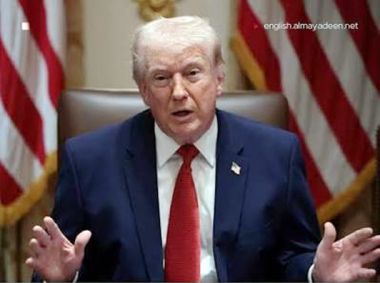
Sydney-Middle East Times Int'l: President Donald Trump has once again followed a familiar pattern: threatening a major escalation, then pausing to give diplomacy another chance.
On this occasion, Iran has publicly stated that no negotiations are scheduled. However, mediators frequently work behind the scenes, and indirect contacts may be continuing even when the parties deny that formal talks are taking place.
The central question is what prompted Trump to step back this time.
The most likely answer is the growing risk of regional escalation.
Across the Middle East, countries have suffered damage to infrastructure, energy facilities and oil exports. The longer the war continues, the greater the danger that separate attacks will merge into a broader regional conflict that becomes increasingly difficult to contain.
In Iraq, approximately 20 people were recently reported killed in American strikes. Their funerals were accompanied by strong anti-American sentiment, illustrating the political consequences of continued US military action.
Further south, the Houthis remain active around the Bab el-Mandeb Strait. Commercial shipping through the Red Sea has declined as companies assess the risks posed by missiles, drones and attacks on vessels.
In the Mediterranean, a drone strike reportedly targeted a US-owned ship, further demonstrating that the conflict is no longer limited to Iran and its immediate surroundings.
Taken together, these developments have created an increasingly dangerous regional environment.
It was therefore significant that Saudi Crown Prince Mohammed bin Salman reportedly urged Trump during a telephone conversation to exercise greater restraint and reduce tensions.
The United Arab Emirates and Qatar have delivered similar messages to Washington.
Their argument is straightforward: the United States initiated the confrontation with Iran, but the American mainland remains beyond the immediate range of most Iranian weapons. Gulf countries, by contrast, are directly exposed to Iranian missiles, drones and possible attacks on military bases, energy installations, ports and cities.
The United States can conduct operations from a distance. Its regional partners must live with the consequences.
Oil prices and domestic pressure
Another important factor is the effect of Trump’s statements on global oil markets.
Whenever the president suggests that negotiations may resume or that military escalation could be paused, oil prices tend to fall. This is highly relevant to the domestic political pressures facing the Trump administration.
The war has now reportedly reached its 157th day. At the beginning of the conflict, Trump predicted that the campaign against Iran would last approximately four to six weeks.
The fighting began on February 28. At that time, the US midterm elections scheduled for November 3 appeared distant. They are now only about three months away, and the political clock is ticking.
Recent polling by the Pew Research Center reportedly showed that more than 60 per cent of Americans opposed the war.
The conflict has also contributed to concerns about inflation, fuel prices and the broader cost of living. These issues are likely to influence voters far more directly than arguments about military strategy in the Middle East.
For Trump and the Republican Party, ending—or at least reducing—American involvement in the Iran war has therefore become an increasingly urgent political priority.
Continued military operations may damage Iranian infrastructure, but they also delay the unavoidable question of how the conflict will ultimately end.
Unless one side achieves a decisive victory, negotiations will eventually be required.
Hormuz replaces the nuclear issue
At the beginning of the war, the international debate focused overwhelmingly on Iran’s nuclear capability.
Today, the most immediate danger is the Strait of Hormuz.
Shipping data reportedly show that vessel traffic through the strait fell by 28 per cent during the most recent four-day period, despite the fact that traffic was already well below normal levels.
The number of ships passing through the waterway remains far below the approximately 100 vessels per day considered necessary to sustain normal commercial operations.
Oman, located to the south of the strait, and Iran, to the north, are reportedly engaged in discussions about how the waterway could be managed over the longer term.
However, those discussions do not provide an immediate solution.
The Strait of Hormuz remains one of the world’s most important energy routes. A prolonged disruption would affect oil exports, gas supplies, insurance costs, global shipping and consumer prices.
What began as a confrontation over Iran’s nuclear programme has therefore developed into a crisis over international trade and energy security.
Limits of the American strategy
The American strategy appears to have been based on punishing Iran through increasingly severe military strikes until its leadership agrees to negotiate on Washington’s terms.
Such a strategy may influence public opinion in a democratic system, especially if civilians face mounting economic and physical hardship.
But Iran is not governed as a democracy.
The Iranian leadership and the Islamic Revolutionary Guard Corps may believe that they can absorb the pressure for longer than the United States is politically prepared to continue the war.
From Tehran’s perspective, strategic success may depend not on defeating the United States militarily, but simply on outlasting it politically.
Iran understands that American public support is declining, elections are approaching and rising fuel prices could become a serious domestic problem for Trump.
If Tehran can survive the strikes while maintaining influence over the Strait of Hormuz and continuing to threaten regional interests, it may emerge from the conflict in a stronger strategic position.
Before the war, Iran was widely regarded by Washington and its allies as an isolated or pariah state. Yet the conflict may ultimately reinforce its position as a major regional power—particularly if it gains greater influence over shipping through the Strait of Hormuz.
This would be far from the outcome Trump or the Republican Party expected when the war began.
The United States may have inflicted serious damage on Iranian military and nuclear facilities. However, military destruction alone does not guarantee a favourable political settlement.
If Iran believes that time is working in its favour, further attacks may strengthen its determination rather than force it to surrender.
The central weakness of the American approach is that it has relied heavily on punishment without establishing a clear and achievable political endgame.
Trump now faces a difficult choice.
He can continue military operations and risk further regional escalation, higher oil prices and growing opposition at home. Alternatively, he can pursue negotiations that may require compromises falling well short of the sweeping victory once promised.
Either way, the war appears to have exposed the limitations of a strategy built on the assumption that overwhelming military pressure would quickly compel Iran to accept American demands.
What was initially presented as a short and decisive campaign has developed into a prolonged test of political endurance—and Iran may believe that endurance is the one battlefield on which it can defeat the United States.
|
|
|
|
|
|












.jpg)