|
|
|
| Lebanon at a Moment of Truth... |
** “Lebanon’s sovereignty is not protected by weapons outside the state’s
control, nor by vague Israeli promises… but by a strong army, national
unity, and enforceable international guarantees.”
|
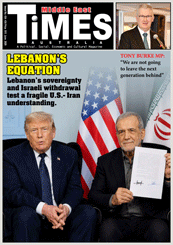
Lebanon at a Moment of Truth: Hezbollah’s Weapons and the Israeli Withdrawal on the Aoun-Trump Agenda
July 20, 2026
See translation in Arabic section
Sydney – Middle East Times Int’l: Lebanon is entering a highly delicate political and security phase, amid the ongoing internal dispute over the fate of Hezbollah’s weapons, the stalled Israeli withdrawal from the south, and growing fears that the current negotiations will become merely a temporary management of the crisis, rather than a final settlement that restores sovereignty and stability to the country.
Hezbollah continues to refuse to hand over its weapons to the Lebanese state under the currently proposed conditions, justifying its position by the lack of genuine guarantees preventing Israel from continuing its military operations or maintaining its forces inside Lebanese territory. The party believes that discussing its disarmament before an Israeli withdrawal and a cessation of hostilities could leave Lebanon vulnerable to any new escalation.
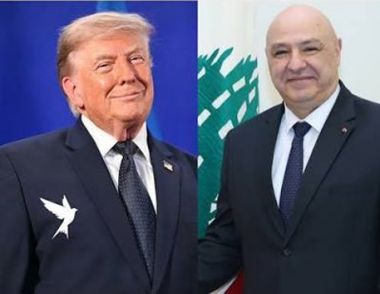
Hezbollah’s weapons and the Israeli withdrawal are on the table for discussion between Aoun and Trump. The party bases its rhetoric on the claim that Israel's objectives extend beyond the borders of southern Lebanon, and that Israeli policies, in its view, have an expansionist character that extends to other countries in the region. However, these concerns, regardless of their validity or exaggeration, do not negate the fundamental question facing the Lebanese: Can two military commands and two armed forces continue to exist within the territory of a single state?
Conversely, a broad spectrum of Lebanese forces adheres to the principle of the state's monopoly on the use of force, arguing that the presence of any armed force outside legitimate institutions obstructs the functioning of the state and renders decisions regarding war and peace subject to partisan or regional calculations. These forces emphasize that confronting external threats is not achieved by weakening or competing with the Lebanese army, but rather by strengthening its capabilities and enabling its full deployment along the borders to protect all Lebanese territory.
A Deep-Rooted Crisis of Confidence
Hezbollah's position cannot be separated from the historical crisis of confidence between Lebanon and Israel, nor from past Lebanese experiences that culminated in shifting alliances and the collapse of political and military bets. The party and its supporters point out that Israel has abandoned Lebanese allies and figures who cooperated with it at various times, citing the experiences of the late President Bashir Gemayel and Major Saad Haddad to illustrate that Israeli interests always take precedence over any commitments or understandings with Lebanese parties.
Furthermore, the continued Israeli military presence in areas of southern Lebanon, coupled with repeated strikes and operations, increases doubts about the feasibility of implementing any agreement without strong international oversight and clear mechanisms for monitoring and accountability.
However, past experiences also demonstrate that relying on illegal weapons has not led to the establishment of a capable state or to protecting Lebanon from wars. Over the past decades, the south has repeatedly become an open battleground, with civilians paying a heavy price in lives, homes, and livelihoods, while the Lebanese economy, tourism, and investment have suffered successive blows. Washington Faces a Test of Guarantees
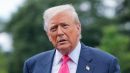
Amid this backdrop, all eyes are on Lebanese President Joseph Aoun's visit to the United States and his anticipated meeting with US President Donald Trump at the White House, the first such visit by a Lebanese president to Washington in nearly two decades. The issues of a ceasefire, the Israeli withdrawal, the future of Hezbollah's weapons, and support for the Lebanese army are expected to top the agenda of the talks between the two presidents.
The visit gains significance as it follows rounds of US-mediated negotiations between Lebanon and Israel, the most recent of which took place in Rome. There, a plan was discussed that involves establishing pilot zones where Lebanese forces would be deployed concurrently with a gradual Israeli withdrawal. However, disagreement persists regarding the sequence of steps: Lebanon demands withdrawal first, while Israel links its withdrawal to addressing Hezbollah's weapons.
This raises a number of crucial questions: Can the United States provide a genuine and lasting guarantee to halt Israeli attacks? Will it set a binding timetable for withdrawal from Lebanese territory? Will it pressure Israel to fulfill its commitments, or will it simply convey its demands to the Lebanese government? The most crucial question concerns the extent to which Washington and its allies are prepared to provide long-term military and financial support to the Lebanese army, enabling it to fully assume its responsibilities. The army cannot deploy, secure the borders, and protect the country if it continues to suffer from shortages in equipment, salaries, and logistical capabilities.
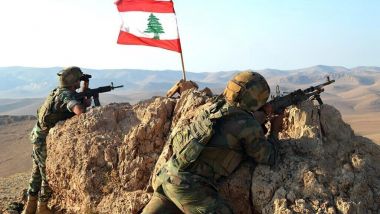
The Lebanese Army in South Lebanon It is not enough for the international community to simply demand that weapons be exclusively held by the state; it also bears the responsibility of assisting the state to become capable of protecting its people and its land, so that fear of Israel is no longer used as a pretext for weapons remaining outside the control of the state.
An Agreement That Carries the Seeds of Division
The positions of Hezbollah MPs reflect the extent of their objection to the course of negotiations and the terms of the proposed agreement. MP Ghazi Zeaiter stated that direct negotiations with Israel have yielded nothing but "empty promises," indicating a lack of trust in Israeli commitments and international guarantees.
MP Hussein Hajj Hassan warned that the framework agreement "contains the seeds of internal strife," arguing that attempting to impose disarmament under occupation and external pressure could lead to a confrontation among the Lebanese instead of addressing the Israeli threat. These positions reveal that the issue is no longer a technical dispute over the mechanism for handing over weapons, but has become a matter affecting political and sectarian balances and the future of the Lebanese system. Any attempt to address the issue by force or through a logic of dominance could open the door to internal turmoil that Lebanon cannot afford.
Conversely, maintaining the status quo carries equally serious risks, as it allows for the continuation of the division over the decision of war and peace and prevents the establishment of a sovereign state capable of negotiating on behalf of all Lebanese.
Therefore, a clear and frank national dialogue is essential to establish a comprehensive defense strategy that defines the role of the army and security forces, provides guarantees for all segments of society, and sets a realistic timetable for addressing the issue of weapons outside state control, in parallel with the Israeli withdrawal and the cessation of attacks.
The Lebanese people are tired of wars.
Beyond partisan positions and regional rivalries, the Lebanese people are experiencing extreme exhaustion. They are weary of repeated wars, displacement, destruction, and economic collapse, and can no longer bear the cost of conflicts that extend beyond their country's borders and capabilities.
The Lebanese want a state that protects them, not an open arena for regional power plays. They want a strong army, functioning institutions, secure borders, a recovering economy, and a future not threatened by missiles, airstrikes, or war decisions made outside constitutional institutions.
Therefore, national unity remains the fundamental bulwark against any ambitions or aggressions. However, unity does not mean ignoring differences or postponing difficult decisions; rather, it means agreeing that the state alone possesses sovereignty, and that all Lebanese are equal in their duty to defend the homeland and in their right to protection. Restoring the state's prestige cannot be achieved through slogans, but rather through a comprehensive plan that begins with ending the Israeli occupation and halting aggression, proceeds through strengthening the army, and concludes with confining weapons and security and military decision-making to legitimate institutions.
Where is Lebanon headed?
Lebanon stands today at a true crossroads. Either President Joseph Aoun's visit to Washington succeeds in securing clear American commitments leading to a genuine Israeli withdrawal, support for the army, and the launch of an internal political process to address the issue of weapons, or the promises remain unfulfilled and the framework agreement becomes a new source of division.
President Aoun is required to present the White House with a comprehensive, sovereign Lebanese position: no weapons outside the state's control, but also no occupation, no aggression, and no infringement on sovereignty. If the United States wants its project to succeed, it must exert its influence on all parties, not demand concessions from the Lebanese side alone.
Ultimately, no party, no matter how powerful, can protect Lebanon alone, nor can any external guarantee replace internal consensus. Saving the country begins when the Lebanese realize that their true strength lies not in multiple armies and weapons, but in a just and capable state, a single army, and a unified national decision.
The big question remains, pending the outcome of the Washington meeting: Will Lebanon enter a phase of restoring its state and sovereignty, or will it find itself facing a new chapter of postponed promises and open-ended conflicts? |
|
|
|
|
|



.jpg)