|
|
|
| U.S.–Iran Talks Delayed as Lebanon Becomes First Test of Trump’s Iran Deal |
** “If this agreement calms markets but leaves Lebanon under fire,
Hezbollah armed, and Iran’s leverage intact, then it is not peace — it
is only a pause before the next crisis.”
|
The Iran Deal: A Dangerous Pause That Leaves Lebanon Exposed
20/06/2026
(See translation in Arabic section)
Sydney-Middle East Times Int'l: The U.S.–Iran diplomatic process has faced an immediate setback after Vice President JD Vance postponed his planned trip to Switzerland, where technical talks with Iran were expected to begin. Journalists gathered in Zurich were left waiting for hours, with transport vehicles ready but no clear explanation beyond the U.S. side citing “logistical reasons.” Iran has reportedly suspended its participation for now, while insisting that the ceasefire must be respected before talks can proceed.
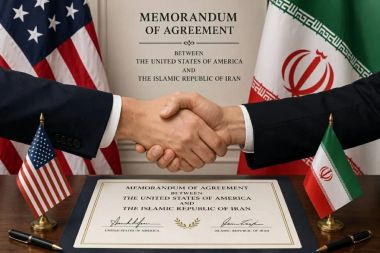
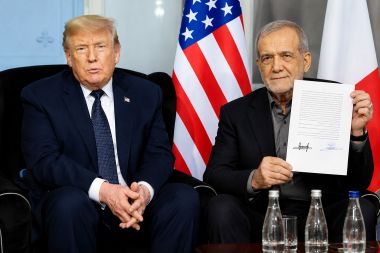
The talks were meant to follow the memorandum of understanding signed between President Donald Trump and Iran, which aimed to end the war and open a 60-day ceasefire period. During that time, negotiators were expected to address the most difficult issues, especially Iran’s nuclear program and regional security arrangements. However, the delay in Switzerland has raised serious doubts about whether the diplomatic process can succeed if it cannot even begin on schedule.
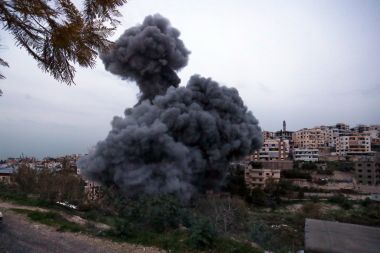
Lebanon has quickly emerged as the most dangerous weak point in the agreement. Israel and Hezbollah have continued exchanging fire, with Hezbollah attacks followed by Israeli airstrikes in southern Lebanon and the Bekaa Valley. A new ceasefire was reportedly agreed after U.S. and Qatari mediation, but reports indicated that Israeli strikes continued briefly after it was supposed to begin.
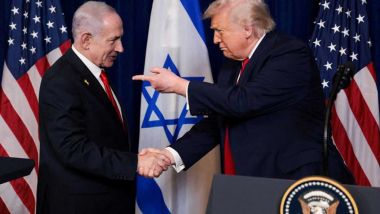
At the same time, Israeli Prime Minister Benjamin Netanyahu is under pressure at home and appears determined to keep Israeli forces in southern Lebanon. Reuters reported that Israel is negotiating with Washington to preserve its military presence in what it calls a buffer zone, despite the U.S.–Iran pact referring to Lebanon’s sovereignty and territorial integrity.
This creates a direct tension between Trump’s peace initiative and Netanyahu’s security policy. While Washington wants de-escalation to protect the Iran deal and reopen regional stability, Israel argues that it must retain freedom of action against Hezbollah. The central question now is whether Trump will pressure Netanyahu strongly enough to protect the agreement, or whether Lebanon will become the front where the deal begins to unravel.
For now, the strongest conclusion is that the U.S.–Iran agreement remains alive but fragile. The postponement of the Switzerland talks, renewed fighting in Lebanon, and Israel’s refusal to withdraw from southern Lebanon all suggest that the peace process is facing its first serious test only days after it was announced.
** The announced understanding between the United States and Iran has been presented as a diplomatic breakthrough and a step toward regional stability. Yet beneath the official language and political celebration, the agreement appears less like a real transformation and more like a temporary pause in a conflict that has already produced winners and losers.
For now, Washington and Tehran both appear able to claim success. The United States gains relief from a costly confrontation, calmer markets, reopened shipping routes and a political message that it has restored order. Iran, meanwhile, survives with its regime intact, its regional influence still alive, and its strategic cards not clearly surrendered. The losers are Lebanon, the Gulf Arab states, and all those who hoped that any new arrangement would finally weaken the forces that have destabilised the region for years.
What has emerged is not a decisive peace agreement, but a memorandum of understanding that delays the most important questions rather than resolving them. Iran’s missile program is not clearly dismantled. Its nuclear questions are pushed into a later stage. Its regional network remains a central source of concern. Hezbollah may have been battered by war, but it has not been eliminated. And Lebanon, already weakened by division, destruction, state paralysis and the power of armed groups, is once again left exposed.
The central problem is that the agreement seems to return the region to where it was before the latest war began. It does not appear to remove the original causes of instability. It does not provide clear guarantees for Lebanon. It does not clearly stop Israel’s military pressure in southern Lebanon and Beirut. It does not dismantle Iran’s regional network. Most importantly, it does not answer the question that matters most to the Lebanese people: who will actually protect Lebanon’s sovereignty?
The agreement is therefore being judged not only by what it says, but also by what it omits. It speaks of a path toward a final deal, but that path is filled with unanswered questions. It refers to commitments, but not enough to enforcement. It restores the Strait of Hormuz to its previous open status, but that was a crisis created by the war itself. It offers calm, but not necessarily justice. It offers process, but not necessarily results.** 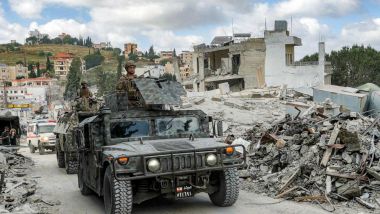 ** **
This is especially dangerous for Lebanon. Lebanon has often been the place where regional deals are tested, violated, or exploited. When Washington and Tehran reach understandings, Lebanon is rarely the strongest voice in the room. Its interests are often discussed indirectly, through the language of stability, resistance, security or regional balance. But the Lebanese people know the cost of these formulas. They have seen their country become an arena for messages exchanged by others. They have seen decisions of war and peace taken outside state institutions. They have seen reconstruction delayed, sovereignty weakened, and national dignity repeatedly compromised.
The Lebanese state, despite its weakness, has shown that it can take strong decisions when there is political will. The issue is not always the absence of state capacity. Often, the issue is obstruction by forces that operate beyond the normal authority of the government. Official decisions may be announced, but implementation is blocked. Governments may speak of sovereignty, but armed realities on the ground limit what the state can actually do.
This is the tragedy of Lebanon: the state is present enough to be blamed, but not powerful enough to govern fully. It is expected to control the country, but is prevented from exercising full authority. It is praised in speeches, but abandoned when real support is needed. Any agreement that ignores this reality will not protect Lebanon.
** The deal therefore raises a painful question: if Lebanon’s own state decisions are not implemented, how can any regional agreement protect Lebanon? A memorandum signed by Washington and Tehran cannot replace a sovereign Lebanese state. It cannot restore authority to the Lebanese army if armed factions remain stronger in practice. It cannot rebuild southern Lebanon if military operations continue. It cannot protect civilians if Israel continues to strike and Hezbollah continues to operate as a state within the state.
Israel’s reaction also complicates the picture. If Israel continues military operations in Lebanon despite the agreement’s language about ending the conflict on all fronts, then the memorandum’s credibility will be tested immediately. A deal that cannot restrain Israel in Lebanon, cannot contain Iran’s influence, and cannot force Hezbollah’s disarmament will be difficult to describe as a real peace framework.
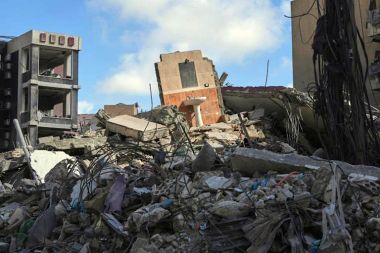
For Lebanon, words are not enough. What matters is whether buildings stop falling, civilians stop dying, and the south stops being treated as an open battlefield. If Washington can negotiate with Tehran but cannot restrain Israel, then Lebanon will remain trapped between Hezbollah’s independent military role and Israel’s continuing military response. Both sides will justify their actions through the existence of the other, while the Lebanese state and people pay the price.
For the Gulf Arab states, the agreement also contains serious risks. Some Gulf governments may welcome any arrangement that reopens trade routes, lowers oil pressure, and reduces the danger of a wider regional war. Their economies need stability. But welcoming de-escalation is not the same as trusting Iran. Many in the Gulf remember that previous agreements did not end Iran’s regional ambitions. They fear that sanctions relief and diplomatic rehabilitation may strengthen Tehran’s hand, especially if there are no firm restrictions on its support for allied armed groups.** The Strait of Hormuz is central to this concern. Reopening the strait is clearly important for global markets and regional economies. But if Iran has shown that it can close or threaten the strait during conflict and then gain diplomatic leverage by reopening it, this creates a dangerous precedent. It suggests that disruption can be used as a bargaining tool. The immediate result may be lower oil prices and calmer markets. The long-term result may be that Iran’s leverage has been confirmed rather than reduced.
The most serious weakness of the memorandum is that it postpones the hard issues. Verification of Iran’s nuclear commitments is not fully resolved. The future of enriched uranium remains open. The missile program is not clearly addressed. The fate of regional proxies is uncertain. Sanctions relief is contemplated, but the conditions and enforcement mechanisms remain matters for future negotiation. This means the agreement is not a final settlement. It is only a framework to negotiate a final settlement.
A framework can be useful if it leads to genuine concessions. But it can also become a trap if one side uses it to gain time, repair damage, rebuild alliances and prepare for the next confrontation. Iran has long experience in using time strategically. So does Hezbollah. In the Middle East, pauses are rarely neutral. A ceasefire can become a recovery period. A negotiation period can become a political shield. Unless the agreement contains clear enforcement, it may protect the very forces it claims to contain.
Lebanon’s fear is that Hezbollah will use this period to claim vindication. Even if Hezbollah has been weakened militarily, it may argue that Iran stood firm, that the United States was forced to negotiate, and that Israel failed to achieve decisive victory. Such a narrative would allow Hezbollah to present itself not as the cause of Lebanon’s suffering, but as part of a victorious regional axis. This would further complicate any attempt to strengthen state authority, implement disarmament, or restore normal political life.
At the same time, Israel may use Hezbollah’s survival as justification to continue operations in Lebanon. This creates a deadly cycle. Hezbollah says resistance must remain because Israel is still attacking. Israel says it must keep attacking because Hezbollah still exists. The Lebanese state stands between the two, issuing decisions and statements, but lacking the power to impose a final outcome. The people of southern Lebanon pay the price. Homes are destroyed. Villages are emptied. Reconstruction is delayed. Families live under fear.
The agreement may therefore be best understood as a dangerous pause rather than a durable peace. It pauses escalation between the United States and Iran. It pauses the economic shock caused by blocked shipping routes. It pauses immediate market panic. But it does not appear to pause Lebanon’s suffering. It does not clearly pause Israeli military action. It does not clearly pause Hezbollah’s political and military role. It does not clearly pause Iran’s regional ambitions. And it does not pause the erosion of Lebanese sovereignty.
For the agreement to become meaningful, several conditions must be met. There must be a clear and enforceable mechanism for Iran’s nuclear commitments. The missile program cannot be ignored. The role of regional armed proxies, especially Hezbollah, must be addressed directly. Israel must be pressured to stop destructive operations in Lebanon if the agreement truly claims to end conflict on all fronts. Lebanon’s state institutions, especially the army, must be supported in practice, not merely praised in speeches. Gulf security concerns must also be treated as central, not secondary.
Without these elements, the agreement risks repeating the same old pattern: Iran gains time, America claims diplomacy, Israel maintains military freedom, Hezbollah survives politically, and Lebanon is left to bury its dead and rebuild its destroyed towns. The issue is not opposition to peace. The issue is opposition to false peace — a peace that calms capitals but abandons villages, lowers oil prices but raises the cost of survival for Lebanon.
The Lebanese people have heard many promises before: sovereignty, reform, reconstruction, disarmament, ceasefire, stability and international support. Yet each time, implementation becomes the missing word. The state announces, but cannot enforce. The world promises, but does not protect. Armed actors negotiate, but civilians suffer.
For now, the warning is clear. The Iran agreement may end a phase of open confrontation, but it does not end the deeper conflict. It may calm markets, but it does not calm Lebanon. It may reopen the Strait of Hormuz, but it does not reopen the road to Lebanese sovereignty. It may allow Washington and Tehran to speak of success, but it leaves Beirut asking the same painful question: how many times must Lebanon pay the price for agreements made by others?
In the end, the real measure of this agreement will not be whether America and Iran can both sell it to their publics. It will be whether Lebanon is finally freed from the cycle of war, obstruction, foreign influence and internal paralysis. Until that happens, the agreement will not represent a new Middle East. It will represent the old Middle East wearing the language of diplomacy — a region where the powerful negotiate, the armed survive, and Lebanon continues to bleed.
|
|
|
|
|
|