| Two Views of the World |
|
Two Views of the World
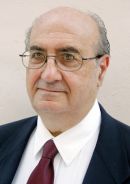
New York Dr. Cesar Chelala
When Steve Witkoff, Donald Trump's chief negotiator on Ukraine, called Vladimir Putin a "humanitarian," he was doing more than making an inaccurate statement. He was assaulting rational language itself, a phenomenon that is becoming increasingly common in public discourse. Unsurprisingly, the remark was ridiculed around the world.
Witkoff praised Putin by saying: "You talk so much about my president, President Trump, being a humanitarian. You are a humanitarian also, sir, and I salute that. I commend you." His comments came as Russia released a retired American teacher, Stephen Hubbard, who had been imprisoned in Russia on charges of fighting as a mercenary in Ukraine.
Responding to Witkoff's characterization, a Downing Street spokesperson stated: "We certainly don't recognize that characterization. President Putin has killed thousands of people, both innocent Ukrainians and his own Russian citizens, whom he has sent to die on the front line. After relentless attacks on Kyiv, its residents have heard what Russian humanitarianism really sounds like."
Dr. Alberto Iñón, an Argentine physician who closely follows events in Ukraine because of personal circumstances, told me: "Calling Vladimir Putin a humanitarian is as accurate as calling Mother Teresa a mass murderer."
These comments brought to mind an incident I witnessed some time ago in Brighton Beach, a neighborhood in Brooklyn traditionally populated by immigrants from the former Soviet Union, including many Ukrainians.
One morning, I went there to enjoy one of the last pleasant days of autumn. Looking out at the sea always seemed to bring me a special sense of peace. I sat on a bench near a woman who was watching her young son play on the sand. He wore a heavy sweater in the blue and yellow colors of the Ukrainian flag.
The boy was building a sandcastle when he suddenly noticed a line of ants crawling nearby. Fascinated, he scooped up a handful and shouted, "Look, Mom! Look what I found!" As he spoke, he began crushing them between his fingers.
The mother's reaction was immediate. A woman who appeared gentle and kind suddenly became stern.
"Boris, don't ever do that again!" she said. "You must not hurt anyone. Do you hear me? You don't hurt anybody. Let them go immediately!"
Startled by the sharpness in her voice, the boy looked frightened. Tears welled up in his eyes as he slowly opened his hand and released the ants.
A moment later, he raised his arms, silently asking to be comforted. His mother embraced him.
Then she said softly, "Boris, this world belongs to all of us. We have to respect one another."
As I watched them, I could not help reflecting on how distant her simple lesson was from the actions and rhetoric of today's self-proclaimed "humanitarian" leaders. They represented two completely different visions of our beleaguered world: one grounded in compassion and respect for life, the other in the distortion of words to justify suffering. |
|