| Mecca Defence Alliance Faces First Major Test as Saudi Arabia Confronts Houthi Attacks |
** “Once a country that is party to the agreement is attacked, you stand by it for its defense.” — Turkish Foreign Minister Hakan Fidan
|
Mecca Defence Alliance Faces First Major Test as Saudi Arabia Confronts Houthi Attacks
9/010/2026
(See translation in Arabic section)
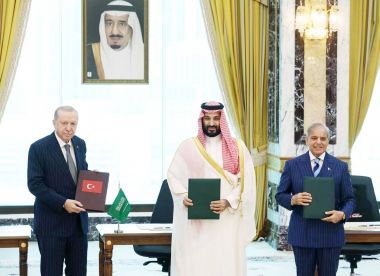
Sydney-Middle East Times Int'l: Saudi Arabia, Pakistan and Turkey have moved to activate their collective defence commitments following escalating Houthi attacks on the kingdom, putting their recently established Mecca Joint Defence Agreement to its first major operational test.
An emergency meeting in Riyadh on 5 October agreed to accelerate the deployment of military forces and capabilities to Saudi Arabia. The decision marked a significant step towards translating the alliance’s political commitments into practical security assistance, although the initial announcements did not disclose troop numbers, equipment inventories or detailed operational responsibilities.
Signed in August, the agreement commits the three countries to regard an armed attack against one member as an attack against all. Its activation signals a coordinated response to threats against Saudi territory, while raising questions about how far each partner’s military involvement will extend.
From Defence Commitments to Operational Support
Pakistan’s delegation included Defence Minister Khawaja Asif, Deputy Prime Minister and Foreign Minister Mohammad Ishaq Dar, and Field Marshal Asim Munir, underscoring the importance Islamabad attaches to the kingdom’s security.
Asif subsequently explained that Pakistani and Turkish personnel were providing support, including reconnaissance, while Saudi forces conducted combat operations. His remarks distinguished assistance to Saudi Arabia from direct participation by its partners in offensive fighting in Yemen.
** Reconnaissance and intelligence support can strengthen a country’s ability to identify threats, monitor movements and coordinate its response. Such contributions may therefore be militarily significant even when foreign personnel are not conducting frontline operations.
However, the alliance’s collective defence principle should not be interpreted as an automatic commitment by every member to an identical combat role. The form of assistance remains subject to operational arrangements and national legal requirements.
Turkey Defines the Limits of Its Involvement
Turkey has since clarified that its contribution will be defensive.
Speaking on 8 October, Foreign Minister Hakan Fidan ruled out Turkish participation in offensive operations and said possible assistance included air defence, electronic warfare and technical support. Reuters reported that Turkey’s parliament had yet to ratify the agreement, with assistance at this stage largely being provided through bilateral arrangements.
Fidan also said preparations to submit the pact for parliamentary approval had been completed. His remarks established an important distinction between defending Saudi Arabia against incoming attacks and deploying Turkish troops to attack targets inside another country.
These limits indicate that the alliance’s immediate response is taking shape through differentiated contributions. Its practical effectiveness will depend on coordinating those contributions, rather than simply announcing a common position.
Yemen Offensive Raises the Stakes
The Riyadh meeting coincided with a major offensive by Saudi-backed forces loyal to Yemen’s internationally recognised government.
Yemeni officials reported advances along the western coast, including the recapture of Mokha and gains around Dhubab, near the strategic Bab el-Mandeb Strait. Saudi Arabia has provided air support for the campaign.
** However, battlefield claims remain contested. The Houthis denied reported government advances around the strait, while accounts from government sources differed over whether control had been consolidated. Reported territorial gains therefore require careful attribution and should not be treated as proof that the wider maritime threat has ended.
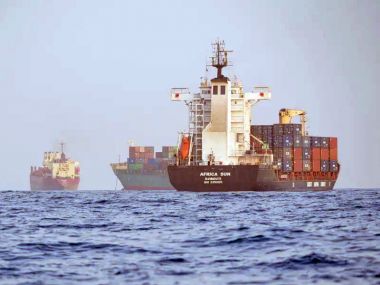
Bab el-Mandeb connects the Red Sea with the Gulf of Aden and provides access to the shipping route leading towards the Suez Canal. Fighting around this narrow passage has implications beyond Yemen, exposing commercial navigation and regional trade to further disruption.
Securing coastal territory may improve the government’s position, but protecting shipping also requires sustained surveillance and the ability to counter missiles and drones.
Washington Supports Saudi Self-Defence
US Secretary of State Marco Rubio has supported Saudi Arabia’s right to defend itself against Houthi attacks.
His comments provided diplomatic backing for Riyadh’s response, but they should not be read as confirmation that American forces have entered the fighting in Yemen. Support for an ally’s security and participation in its military campaign remain separate decisions.
The involvement of Pakistan and Turkey adds another dimension to Saudi Arabia’s security partnerships. It also creates a test of whether the new alliance can deliver timely assistance while maintaining clearly defined responsibilities.
Deterrence and the Risk of Escalation
The pact’s activation carries a strong political message: threats against one member can draw a coordinated response from the others.
The central challenge is to make that response credible while controlling the risk of a wider conflict. Defensive assistance may help protect Saudi territory, but expanding military involvement could also complicate efforts to contain the confrontation.
For civilians, the immediate priorities remain protection from attacks, reliable access to essential services and the prevention of further displacement.
The Mecca alliance now faces the practical demands behind its founding pledge: coordinating capabilities, defining the limits of intervention and demonstrating that collective defence can strengthen security while preserving space for diplomacy. |