|
|
|
| Gulf States at a Strategic Crossroads: Confront Iran—or Learn to Coexist? |
** “The Gulf states are unlikely to become Iran’s allies, but geography, economic survival and doubts about American protection .”
|
Gulf States at a Strategic Crossroads: Confront Iran—or Learn to Coexist?
16/09/2026
(See translation in Arabic section)
Sydney-Middle East Times Int'l: The rapidly expanding conflict in Yemen, attacks on Saudi energy infrastructure and growing uncertainty over Washington’s security guarantees have exposed the Arab Gulf states to a new level of strategic vulnerability.
For decades, Gulf security was built on a relatively straightforward arrangement: the United States provided military protection, weapons and intelligence, while the Gulf states supplied energy, strategic access and political partnership. That arrangement has not entirely collapsed, but recent developments have raised serious doubts about whether it can continue in its traditional form.
Saudi Arabia now faces Houthi advances across its southern border, attacks on its territory and growing threats to the waterways and pipelines essential to its oil exports. The United Arab Emirates, despite suspending trade and financial dealings with Tehran, has reopened high-level political communication with Iran.
These developments raise a decisive question: will the Gulf states resort to cooperation with Iran to protect themselves from a wider regional war?
The most likely answer is yes—but this cooperation will be cautious, limited and driven by necessity rather than trust.
Saudi Arabia’s Strategic Dilemma
Saudi Arabia faces the most immediate and serious challenge.
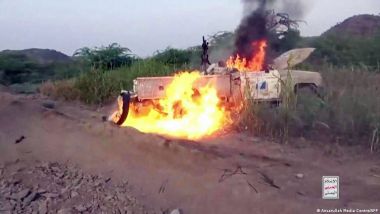
The Iran-backed Houthis have intensified their attacks against Saudi Arabia and Saudi-supported forces in Yemen. Their control of strategic territory near the Bab Al-Mandeb Strait has also increased their ability to threaten international shipping and Saudi oil exports.
Bab Al-Mandeb had become an essential alternative route after Iran’s disruption of shipping through the Strait of Hormuz. With both waterways now vulnerable, Saudi Arabia’s energy security is under pressure from two directions.
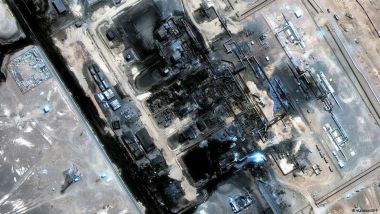
The kingdom’s 1,200-kilometre East-West pipeline, which transports oil to the Red Sea port of Yanbu and bypasses the Strait of Hormuz, was also targeted in an attack allegedly launched by Iran-aligned militias in Iraq. Repairs could take weeks, further exposing the vulnerability of Saudi Arabia’s export network.
The kingdom therefore faces a difficult calculation. It possesses one of the Middle East’s most advanced military forces, particularly in combat aviation and air defence, but military strength alone has not eliminated the threat from drones, missiles or armed groups operating across national borders.
A renewed large-scale campaign in Yemen could be costly and inconclusive. Saudi Arabia’s intervention, which began in 2015, failed to defeat the Houthis despite years of military operations and enormous expenditure. Returning to a full-scale war would endanger Saudi cities, energy facilities and economic projects without guaranteeing a decisive victory.
Riyadh must therefore balance military deterrence with diplomacy. It needs to demonstrate that attacks on its territory will carry consequences while keeping negotiations open with the Houthis and, indirectly, with Iran.
Doubts About American Protection
The Saudi dilemma has been intensified by Washington’s reluctance to intervene directly.
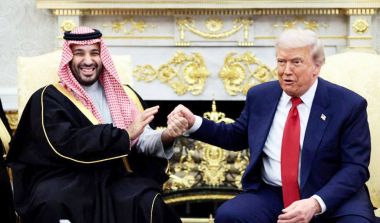
According to reports, Crown Prince Mohammed bin Salman requested American military assistance against the advancing Houthis. President Donald Trump’s administration offered intelligence support but hesitated to open another front while the United States remained engaged in its war against Iran.
This response sends an uncomfortable message to all Gulf capitals: even a close American ally may not receive direct military assistance when Washington believes intervention would impose excessive costs or complicate its wider priorities.
The recently signed Mecca Joint Defence Agreement involving Saudi Arabia, Türkiye and Pakistan has also remained untested. Pakistan, which maintains relations with both Riyadh and Tehran and has played a mediating role in the US-Iran conflict, appears reluctant to become directly involved in the confrontation with the Houthis.
Saudi Arabia may consequently possess several security partnerships without having a guaranteed military protector prepared to intervene at the decisive moment.
This does not mean the US-Gulf alliance is approaching its end. Washington remains the Gulf states’ principal supplier of advanced weapons and intelligence, while American military bases continue to play a central role in regional defence.
However, Gulf governments increasingly recognise that US protection is conditional, selective and governed primarily by American interests. They can no longer assume that every threat to their security will automatically trigger a decisive US military response.
Economic Transformation Under Threat
For Saudi Arabia, the security crisis is not confined to the battlefield. It threatens the kingdom’s long-term economic transformation.
Crown Prince Mohammed bin Salman’s Vision 2030 depends on international investment, tourism, infrastructure development and confidence in Saudi stability. Major events such as Expo 2030 and the 2034 FIFA World Cup require a secure regional environment.
Repeated attacks on oil infrastructure, airports, cities or shipping routes could discourage investors and increase the cost of insurance, construction and transportation. They could also force the Saudi government to redirect resources from development projects towards defence and security.
Saudi citizens expect employment, affordable housing, public services and protection from external attacks. If economic pressures intensify while security deteriorates, the government could face rising domestic dissatisfaction.
The kingdom must therefore avoid allowing the Yemen conflict to undermine the economic transformation on which much of its future political stability depends.
The UAE’s Pragmatic Approach
The United Arab Emirates appears to be following a strategy of managing the Iranian threat rather than seeking to eliminate or directly confront it.
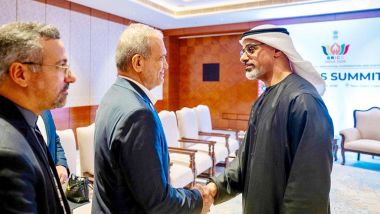
The meeting between Abu Dhabi Crown Prince Sheikh Khaled bin Mohamed bin Zayed Al Nahyan and Iranian President Masoud Pezeshkian during the BRICS summit was the highest-level encounter between the two countries since the outbreak of the US-Israel war with Iran.
It occurred only weeks after the UAE suspended trade and financial dealings with Tehran because of regional escalation. The meeting did not restore those transactions or produce a new agreement, but its political significance was clear: Abu Dhabi wants to maintain communication even during a serious crisis.
Presidential diplomatic adviser Anwar Gargash summarised the UAE’s position when he acknowledged that rebuilding trust would be extremely difficult but that geography left the country with no alternative to engagement.
This is not a policy of alignment with Iran. It is strategic risk management.
The UAE has little interest in becoming a frontline state in a prolonged regional war. Its economic model depends on trade, aviation, ports, financial services, tourism and foreign investment—all of which require predictability and stability.
By maintaining diplomatic channels with Tehran, Abu Dhabi hopes to reduce the possibility of miscalculation, communicate its red lines and protect its territory and economic interests.
Will the Gulf Cooperate With Iran?
The Gulf states are unlikely to establish a strategic alliance with Iran. Major disputes remain over regional influence, armed groups, maritime security, ballistic missiles and Tehran’s relationships with the Houthis and other non-state actors.
Trust has been severely damaged and will take years to rebuild.
Nevertheless, selective cooperation is becoming increasingly likely in five principal areas:
1. De-escalation and non-aggression: Gulf states may seek direct or mediated understandings ensuring that their territories and infrastructure are not targeted during conflicts involving Iran and the United States or Israel.
2. Maritime security: Protecting the Strait of Hormuz, Bab Al-Mandeb and commercial shipping could create limited common interests, particularly when disrupted trade damages all regional economies.
3. Energy security: Iran and the Gulf producers share an interest in preventing uncontrolled attacks on oil facilities and export routes that could destabilise global markets.
4. Yemen negotiations: Saudi Arabia may increasingly conclude that a sustainable settlement with the Houthis requires Iranian cooperation or, at minimum, Iranian non-interference.
5. Trade and diplomacy: Even where sanctions or political restrictions remain, communication channels may expand to prevent misunderstandings and prepare for the gradual restoration of economic relations.
Such cooperation would be transactional rather than ideological. Gulf governments would engage Iran because permanent confrontation is becoming too dangerous—not because their strategic concerns have disappeared.
Different States, Different Strategies
The Gulf states will not necessarily adopt one unified policy.
Oman is likely to continue its traditional mediating role and maintain open channels with Tehran. Qatar will preserve relations with Iran while retaining its close security partnership with the United States.
The UAE will probably combine economic pressure with diplomatic engagement. Saudi Arabia may pursue negotiations while strengthening its deterrence and seeking additional defence partners.
Bahrain and Kuwait, because of their geography and the presence of foreign military forces, will remain especially vulnerable to any escalation. They may therefore support regional dialogue while continuing to depend heavily on Western security arrangements.
The emerging Gulf strategy will be based on diversification: American weapons and intelligence, Asian economic partnerships, stronger regional defence capabilities and direct communication with Iran.
From Confrontation to Managed Coexistence
The central risk facing the Gulf states is not simply an Iranian military attack. It is the possibility of becoming battlefields in a confrontation between larger powers.
American military bases offer protection, but they can also become targets. Economic wealth provides influence, but it cannot prevent drones or missiles from threatening energy infrastructure. Advanced weapons strengthen deterrence, but they cannot replace diplomacy or eliminate all asymmetric threats.
For this reason, the Gulf states are likely to move towards a policy of managed coexistence with Iran.
This will not mean trusting Tehran, abandoning Washington or accepting the regional activities of Iran and its allies. It will mean recognising that neither side can remove the other from the region and that continuous confrontation threatens their shared economic and security interests.
The future Gulf order may therefore rest on a delicate formula: continued partnership with the United States, diversified international relationships, stronger independent defence capabilities and carefully negotiated understandings with Iran.
The Gulf states will cooperate with Tehran where cooperation protects their sovereignty and prosperity, while maintaining deterrence where Iranian actions threaten them.
Their ultimate objective will not be friendship with Iran, but preventing geography, proxy conflicts and global power rivalries from turning the Gulf into a permanent war zone. |
|
|
|
|
|