Pope Leo XIV canonized Bishop Ignatius Maloyan, an Armenian-Lebanese Catholic martyr.
21/10/2025
(See translation in Arabic section)
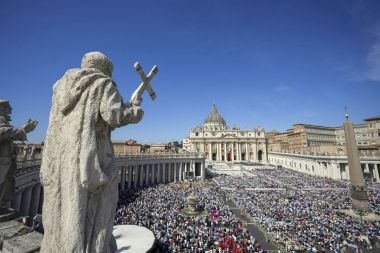
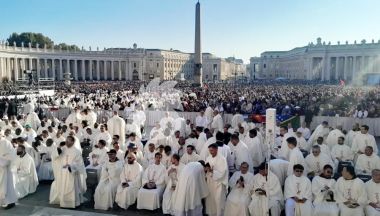
Sydney-Middle East Times Int'l: Pope Leo XIV has canonised seven new saints, including an Armenian -Lebanese Catholic martyrArchbishop Ignatius Maloyan, during a solemn Mass attended by 70,000 worshippers in St Peter’s Square. The ceremony featured bells, banners, and blessings, and comes ahead of the Pope’s scheduled visit to Lebanon next month, which President Joseph Aoun and First Lady Nehmat Aoun confirmed is being prepared as a mission of peace and hope. The canonisation ceremony, held in St Peter’s Square on Sunday, marked a deeply symbolic moment for Lebanon’s Christian community. Archbishop Maloyan, martyred during the Armenian Genocide for refusing to renounce his faith, was elevated to sainthood alongside six other figures from around the world. Among the newly canonised were Peter Tu Rot, the first saint from Papua New Guinea; Venezuelan physician José Gregorio Hernández Cisneros, revered as the “Doctor of the Poor”; and María Carmen Elena Rendeles Martínez, a nun born without a left arm who founded the Congregation of the Handmaids of Jesus. Also canonised were three Italians: Bartolo Longo, a former Satanist who became a priest and Marian devotee; Vincenza Maria Bologne, founder of the Sisters of Mercy; and Maria Troncati, who dedicated her life to serving Ecuador’s indigenous communities.
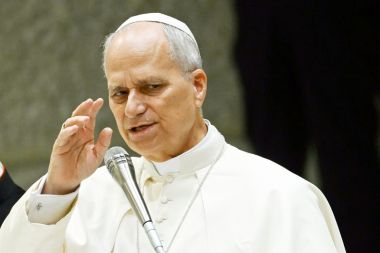
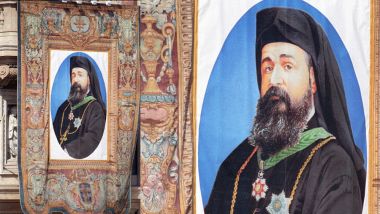
Bells rang out over St Peter’s Square as the rite of canonisation began. Huge portraits of the seven new saints were unfurled from windows overlooking the square. Pope Leo XIV, dressed in a ceremonial white cassock and mitre, emerged from St Peter’s Basilica, preceded by bishops and cardinals in white vestments.
Cardinal Marcello Semeraro, prefect of the Dicastery for the Causes of Saints, read aloud profiles of each candidate to applause from the crowd. With the reading of the canonisation formula, the seven were officially declared saints of the Catholic Church. The Vatican estimated that around 70,000 people attended the ceremony.
In his homily, Pope Leo described the new saints as “martyrs for their faith,” “evangelisers and missionaries,” “charismatic founders,” and “benefactors of humanity.” He told the crowd, “Today, we stand before us seven holy witnesses, men and women, who, by God's grace, left the lamp of faith burning and became lamps illuminating the world with the light of Christ.” He added, “May their intercession assist us in our trials and their example inspire us in our shared vocation to holiness.”
He also spoke of the spiritual necessity of prayer, comparing it to breathing: “Just as we never tire of breathing, so we will never tire of praying. Just as breathing sustains the body, so prayer sustains the soul.”
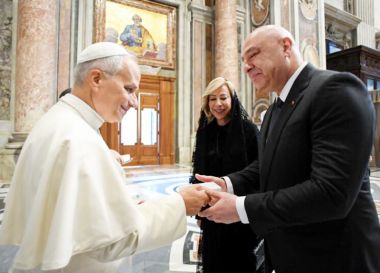
Archbishop Melkon Nazarian Pope Leo receives President Aoun and Mrs Aoun
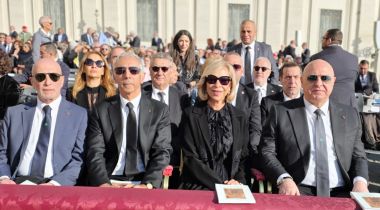
President Aoun’s attendance was formally acknowledged by the Pope, who also welcomed Italian President Sergio Mattarella and a delegation from Armenia. Aoun later met with Mattarella at the site of the celebration.
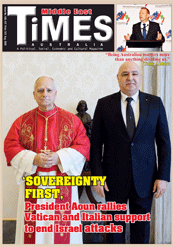
Before the Mass, Pope Leo XIV received President Aoun and the First Lady. During their meeting, Aoun affirmed that Lebanon eagerly awaits the Pope’s visit at the end of next month and confirmed that all arrangements have been made for its success. The Pope responded by saying he intends to make the visit one of peace and hope.
Archbishop Maloyan’s life was marked by devotion and resilience. Born in Mardin in 1869, he completed his primary education at a school affiliated with the Armenian Archdiocese of Mardin under Archbishop Melkon Nazarian. In 1883, he was sent to the Patriarchal Monastery of Our Lady of Bzommar in Keserwan, Lebanon, where his deep faith and piety were recognised.
He was ordained a priest on 6 August 1896, the Feast of the Transfiguration, by Catholicos-Patriarch Stephanos Peter X Azarian. After ordination, he began his ministry at the Monastery of Our Lady of Bzommar and later served in Alexandria and Cairo, Egypt. He also spent time in Constantinople before returning to Mardin.
In 1911, the Holy Synod of the Armenian Church elected him Archbishop of the Diocese of Mardin. His episcopal ordination took place on 22 October 1911, conducted by Catholicos-Patriarch Boghos Bedros XIII Terzian. His virtuous life and service earned him honours and medals from the Ottoman authorities.
Despite this recognition, he was arrested and executed on 11 June 1915 in Deir ez-Zor, Syria, along with a convoy of priests and faithful. His martyrdom was a result of his refusal to convert to Islam during the Armenian Genocide. His beatification process began in 1966 and concluded in 2001.
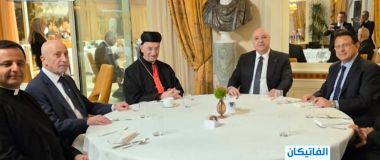
President Aoun and Mrs Aoun with other guests Patriarch Rahi with President Aoun and other guests
Pope John Paul II declared him beatified on 2 October 2001 in a ceremony at St Peter’s Basilica. The universal Church commemorates his memory annually on the Saturday closest to 11 June. His canonisation on 19 October 2025 marks the final step in his recognition as a saint.
The Pope expressed his hope for peace in the world and an end to violence and suffering. The Lebanese people, according to President Aoun, are eagerly preparing to welcome the Pope. The canonisation of Maloyan has been received as a moment of pride and spiritual affirmation for Lebanon.
Following the ceremony, Pope Leo travelled down the Via della Conciliazione in his popemobile, stopping frequently to bless babies and greet well-wishers. The event was widely covered by international media and celebrated by Catholic communities across the globe. |