|
|
|
| Tony Abbott Urges Bold Business Leadership as Lebanese Australians Champion Enterprise and National Unity |
** “Setting Our Own Pace: Turning Challenges into Opportunity” - Salim Nicolas AO
***
“Closing the Protection Gap in Australian Construction” - Stefan Hicks
***
“The things that Tony Abbott Praises the Australian Lebanese Community and Calls for a Stronger Economy As Australians will always be more important than anything that divides us.”- Tony Abbott
***
“Australian businesses do not need greater government intervention—they need the barriers and disincentives to be removed.”- Dr. Joe Rizk AM
|
Tony Abbott Urges Bold Business Leadership as Lebanese Australians Champion Enterprise and National Unity
13 July 2026
(See translation in Arabic section)
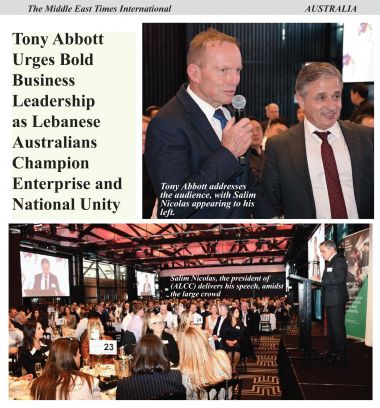
Sydney- Middle East Times Int’l: The Australian Lebanese Chamber of Commerce (ALCC) held its annual business luncheon at Dalton House before a crowd of more than 500 guests. Attendees included Chamber President Salim Nicolas AO and his wife Lara; Lebanon's Ambassador to Australia, H.E. Mirna Khawly; Consul General H.E. Raymond Chemlati; guest of honour and former Prime Minister of Australia Tony Abbott AC; former NSW Minister John Ajaka; SHC founding director Stefan Hicks; Geoff Wild AM, Chairman of Arab Bank Australia; Dr Joseph Rizk AM, Chief Executive Officer of Arab Bank Australia; Professor Fadia Ghossayn AO, Founding Director of the Lebanese Australian Foundation; Sarkis Nassif, President of the Patriarchal Foundation for Integral Development in Australia; and business leaders Danny Nicolas AO, Richard Andary, Jad Haber, David Isaac, Joe Khattar AO, David Isaac, and Fred Faker, as well as many prominent members of the community and media representatives.
and Fred Faker, together with many business and community leaders and media representatives.
SHC, the specialist construction insurance brokerage, was the principal sponsor of the event. The master of ceremonies was Business Sydney Executive Director Paul Nicolaou, while the lucky-door prize was drawn by SHC marketing manager Elise Krucler, and the winner was our editor Camil Shalala. The following are edited extracts from the keynote speakers. 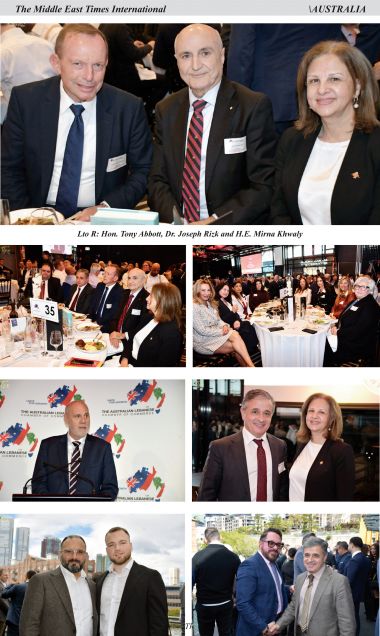
Anyone who has attended a Lebanese wedding knows that we don’t merely listen to the music—we become part of it. When we clap together, we follow a shared rhythm. This is called pacing.
In celebration, pacing is great fun. But in business, following the prevailing pace can mean being swept along by a market overwhelmed by negativity. Visionary leaders respond differently. They remain agile, plan ahead and focus their energy on transforming challenges into opportunities.
Consider the remarkable story of Stan Shih. Born in Taiwan, he lost his father at the age of three and helped his mother at the markets. Through sacrifice and determination, he returned to school, completed a master’s degree in electronics and, at 32, founded Acer.
In the late 1980s, before the personal-computer industry had embraced multimedia, Stan challenged his factory managers to produce computers with CD-ROM drives. They requested 12 months. He demanded action immediately, declaring that the first factory to deliver would remain in business.
Within three months, Acer had become a global leader in PC multimedia. Stan valued employees with “fire in their belly” and had little patience for what he called NATO: “No Action, Talk Only.”
The Petronas Twin Towers offer another example of setting a bold new pace. One tower was assigned to a Japanese consortium and the other to a South Korean group. Driven by national pride and healthy competition, the teams completed 88 storeys in just two years and two months, establishing a new global standard.
Several years ago, my brother Daniel and I relocated DASCO into a 115-year-old building. We later discovered that our office had once formed part of the production line for Arnott’s Biscuits.
William Arnott arrived from Scotland at the age of 20 with only a few shillings. Twice, floods destroyed the bakeries he had built through borrowed money. Yet he borrowed again and established a factory at Homebush—then considered the middle of nowhere. Critics called it “Arnott’s Folly.”
Arnott refused to surrender to disaster or ridicule. He secured his milk supply by purchasing 200 cows, developed an extensive horse-drawn delivery network and attracted workers to the area. His success was founded on constant improvement and an uncompromising commitment to quality.
Today, we are honoured to welcome the Hon Tony Abbott AC. Tony, you previously encouraged Australians to become “our very best selves.” We look forward to hearing your inspiring words—and I understand that Tim Tams are your favourite. You certainly have excellent taste.
Ladies and gentlemen, none of us can control every government policy or economic condition. But each of us can determine the pace at which we respond.
“We cannot always control the conditions around us, but we can set our own pace, raise our own standards and turn every challenge into an opportunity.”
As ALCC members, we may sometimes be competitors, but we are also friends, mentors and advocates for one another. By combining our Lebanese competitive spirit with Australia’s pursuit of quality, we can rise above negativity, accelerate ambition and deliver our very best work.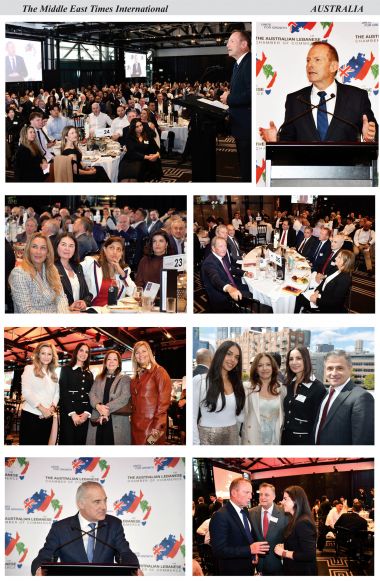
For more than 35 years, SHC has worked alongside Australia’s construction industry, earning a reputation as a specialist insurance business defined by expertise, personal service and a high-touch approach. Our clients have direct access to experienced professionals who understand the realities of construction and the risks confronting the industry.
Through this experience, SHC identified a significant gap in the Australian market: protection against latent defects.
When serious structural defects emerge after practical completion, owners, developers and financiers can face costly legal disputes and prolonged uncertainty. Rather than simply offering an existing product, SHC invested in developing an innovative solution designed specifically for the Australian market.
This work led to Latent Defects Insurance (LDI), developed in partnership with Resilience Insurance and representing an Australian first.
LDI covers the cost of qualifying latent defects discovered after practical completion, without requiring owners to endure lengthy legal proceedings. It provides protection beyond traditional warranty periods, greater certainty for financiers and purchasers, and long-term reassurance for owners.
For developers, LDI can strengthen a project’s value and marketability. For financiers, it provides greater confidence. For purchasers and owners, it offers meaningful protection after construction is completed.
“Latent Defects Insurance is more than protection against building failures—it is an investment in quality, accountability and public confidence.”
This protection is increasingly important as Australia confronts a severe housing crisis and seeks to deliver 1.2 million new homes. Meeting that target will require more medium- and high-density development, despite rising costs, regulatory pressures and declining consumer confidence following several widely publicised building failures.
The recent passage of legislation in New South Wales allowing LDI to operate as an alternative to the strata building bond is an important step forward for consumer protection and the construction sector.
While relatively new in Australia, LDI has operated internationally for about 70 years across more than 40 countries. This experience demonstrates its capacity to improve construction quality, strengthen accountability and restore consumer confidence.
LDI also delivers commercial benefits for developers, including stronger marketing opportunities, reduced exposure to defect-rectification costs and access to broader risk-management services.
SHC is proud to support the Australian Lebanese Chamber of Commerce and its members, many of whom contribute significantly to Australia’s construction industry, economy and wider community.
We look forward to strengthening this partnership and supporting a construction sector built on quality, resilience and trust.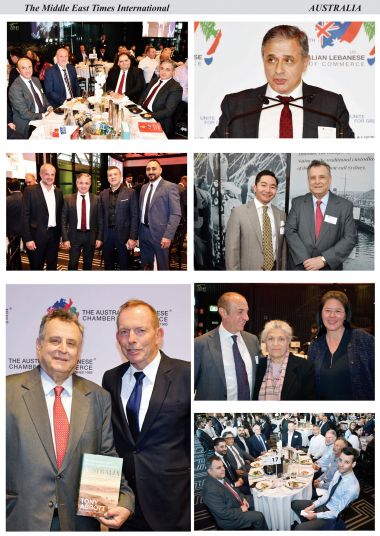
It is wonderful to be with you today at this magnificent Australian gathering.
The story of modern Australia, from 1788 to the present day, has been shaped by people who came to this country seeking a better life for themselves and their families. That is certainly true of those who arrived from Lebanon over the past 150 years and made an extraordinary contribution to our nation.
Today, I want to pay tribute to the Australian Lebanese community. Around a quarter of a million Australians are of Lebanese heritage, representing approximately one per cent of our national population and about two per cent of the population of New South Wales. Yet your contribution has been far greater than your numbers might suggest.
Australians of Lebanese heritage have excelled in public life, sport, business, education, the professions and community service. More importantly, members of this community have always made me feel personally welcome. Your warmth, generosity, hospitality and commitment to Australia are deeply appreciated.
I also want to pay tribute to everyone involved in business, particularly small business.
We need good governments, strong institutions and active community organisations. But ultimately, we cannot have a strong community without a strong economy—and we cannot have a strong economy without profitable private businesses.
Too often, people speak as though society can prosper without a successful economy, or as though the economy does not depend upon entrepreneurs, innovators and people prepared to take risks. Nothing could be further from the truth.
Business owners employ people, support families and provide the products and services upon which our communities depend. Without their effort, investment and determination, we would not enjoy the prosperity and opportunities to which Australians rightly aspire.
That is why governments must avoid burdening businesses with excessive taxation, regulation and administrative costs. Business owners should be able to concentrate on serving their customers, improving their products and services, and supporting the staff who make their enterprises possible.
The central role of business in Australia’s success must never be forgotten. We need policies that encourage innovation, reward investment and give Australians an incentive to work hard and pursue their ambitions. We need governments that are prepared to say “yes” to enterprise and opportunity, rather than constantly placing new obstacles in people’s way.
There are legitimate concerns about the direction of the Australian economy. Productivity has weakened, real wages have come under pressure and many households face considerable uncertainty over the value of their homes and their financial future.
Australians want their children to have the opportunity to enter the housing market. At the same time, falling property values can seriously affect millions of households that own or are paying off their homes. A ten per cent decline in the value of a $1.5 million Sydney property represents a $150,000 reduction in a family’s wealth. That is not a minor matter.
Australia therefore needs economic policies that restore confidence, reduce unnecessary burdens and reward people who invest, innovate and create employment. Lower taxes, more affordable electricity and putting Australia’s national interest first are worthy priorities for any government.
In politics, parties must also focus on presenting their own principles and policies instead of constantly promoting or attacking their competitors. Australians will return to political parties when those parties demonstrate conviction, confidence and a credible plan for the future.
The Liberal Party must acknowledge that it has not always lived up to the expectations of its traditional supporters. Leadership instability, policy mistakes and the failure to win the 2025 federal election caused many voters to question whether the party still possessed the confidence and conviction necessary to govern.
Those voters can be won back—but only through stronger leadership, clear principles and practical policies that respond to their concerns.
More broadly, Australia needs greater emphasis on national unity and less emphasis on the differences between us.
Australia has always been diverse. Before European settlement, this continent was home to hundreds of Indigenous clans and language groups. Later came settlers from the British Isles, followed by migrants from Lebanon and almost every other part of the world.
Modern Australia is a mosaic of people who came here because they admired what this country represented—its freedom, institutions, culture and opportunities. They chose to join Australia and contribute to its future, and our nation is immeasurably richer because of their presence.
Whatever our origins or backgrounds, we are all rowing together. As former prime minister John Howard often reminded us, the things that unite us as Australians are always more important than anything that divides us.
My message to everyone here is simple: be proud of this country and continue striving to be the very best you can be, both individually and collectively. Never accept the idea that mediocrity is the only option.
The challenge for all of us is to become our best selves—to be better today than we were yesterday and better tomorrow than we are today.
May God continue to bless this great country of ours, and may the Australian Lebanese Chamber of Commerce and the entire Australian Lebanese community continue to think boldly, aim high and place no limits on what can be achieved.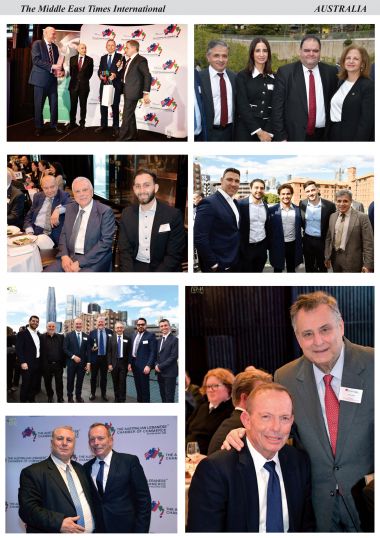
Thank you to Paul for serving as our Master of Ceremonies and, as always, doing an outstanding job.
I have listened to Tony Abbott speak on many occasions over the years, and what has always impressed me is the passion and conviction with which he delivers his message.
Tony’s love for Australia is well documented—not only in his books, but also in the powerful speeches he has delivered in government, public life and at community and business gatherings such as this.
If I could summarise Tony’s message today, it would be that Australian businesses do not need greater government intervention; they need governments to remove the barriers, excessive regulation and disincentives that restrict investment, productivity and growth.
Governments and political leaders must recognise the impact that poorly designed policies can have on businesses, workers and the wider economy.
Australia has enormous opportunities, advanced technologies, abundant natural resources and talented, hardworking people. We are fortunate to live in a remarkable country, and this is something Tony has consistently emphasised throughout his public life.
Tony, thank you for generously giving us your time today. Please join me in thanking Tony Abbott for being with us. |
|
|
|
|
|