Chinese Foreign Minister Wang Yi's Australia Visit: Prioritizing Business Over Diplomacy
23/03/2024
(See translation in Arabic section)
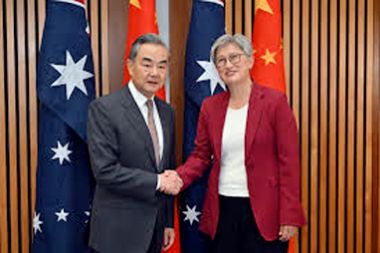
Sydney - Middle East Times Int’l: Chinese Foreign Minister Wang Yi's current visit to Australia may appear as a routine diplomatic engagement, but beneath the surface lies a strategic focus on business and economic interests, particularly in anticipation of the upcoming visit by the Chinese Premier. Departing from traditional diplomatic channels, Wang's meticulously planned itinerary underscores Beijing's determination to bolster business relations while minimizing opportunities for public dissent.
Despite some logistical challenges stemming from the unconventional approach, Beijing's strategy seems to be yielding results. The business community, including trade organizations representing key sectors like wine, lobster, and renewable energy, has shown considerable enthusiasm. Notably, Wang's meeting with former Prime Minister Paul Keating signifies China's inclination to engage with past leaders perceived as allies.
Wang's engagement with the Australia China Business Council (ACBC) underscores China's prioritization of direct engagement with business sectors, recognizing their influence in shaping diplomatic ties. The discussions covered a wide array of topics, emphasizing the mutual benefits of commercial cooperation between the two countries.
According to Feng Chongyi, an associate professor at the University of Technology Sydney, Wang's strategy aligns with China's goal of strengthening economic ties with Australia, capitalizing on Canberra's economic vulnerabilities.
Looking ahead, all eyes are on the forthcoming visit by Chinese Premier Li Qiang to Canberra, expected to catalyze breakthroughs in trade relations. Anticipation mounts regarding potential announcements lifting bans on Australian exports, particularly wine, lobster, and beef, indicating a thaw in previously strained trade relations.
Wang's visit transcends diplomatic formalities, serving as a strategic maneuver to reposition China as a vital economic partner for Australia amidst global uncertainties. By prioritizing business interests, Wang aims to pave the way for the restoration of robust political and trade relations between the two nations, positioning Australia as a gateway for China's economic expansion amid geopolitical tensions with other global powers.
RBA Assures Stability: Australian Banks Secure Despite Cash Risk for Some Borrowers
The Reserve Bank of Australia (RBA) has released its latest Financial Stability Review (FSR), highlighting potential challenges for mortgage borrowers while reassuring the stability of the country's banking sector. According to the report, approximately 5% of mortgage holders are spending more on repayments and living expenses than they earn. This figure could rise above 6% by mid-year if inflation remains high and interest rates increase. However, as inflation declines and interest rates follow suit later this year or in early 2025, the proportion of borrowers facing negative cash flow is expected to decrease. Even under the RBA's "higher-for-longer" scenario, the percentage of borrowers running out of cash is projected to stay below 3%.
Despite these projections, the RBA emphasizes that these figures do not directly translate to an increase in mortgage defaults. Many borrowers may resort to various adjustments, such as increasing work hours or selling their property, before defaulting on their mortgages. Presently, home loans in arrears for over 90 days stand at around 0.7%, slightly higher than pre-pandemic levels. However, temporary hardship arrangements provided by lenders have kept arrears rates relatively lower.
While unemployment remains a concern, research indicates that employees with mortgages are less likely to lose their jobs. Rising home values also offer a safety net, enabling borrowers to sell their property to settle debts if necessary. Even in a scenario where home values plummet by 30%, only 11% of borrowers would be in negative equity.
Moreover, Australia's major banks have undergone stress tests indicating their resilience, even in dire economic situations. However, challenges persist, particularly concerning the repayment of Term Funding Facility loans acquired during the pandemic. The RBA warns of risks stemming from overseas, particularly from the Chinese property sector's weakness and optimistic financial market sentiments. Additionally, cyber threats pose a potential danger to financial and economic infrastructure.
In summary, while some mortgage borrowers face cash flow risks, Australia's banking sector remains robust. The RBA's proactive measures and stress tests ensure preparedness for potential challenges, both domestically and internationally.
Government hears back on religious schools review, but its own plans are still unclear
22/03/2024
(See translation in Arabic section)
Sydney - Middle East Times Int’l: An independent review into protecting LGBT staff and students at religious schools is now complete, but the government's own plans are no clearer.
In 2022, Attorney-General Mark Dreyfus asked the Australian Law Reform Commission (ALRC) to consider how best to prevent religious schools from discriminating against LGBT people in hiring and enrolment.
The government promised to do this at the last election, as a counterweight to its promise to introduce legal protections for religious beliefs.
Both ideas were tried by the Morrison government. The religious protections idea came first, to please conservatives unhappy with the passage of same-sex marriage. Protections for LGBT staff and students came second in a bid to gain broad support.
But Mr Morrison abandoned the exercise when several of his backbenchers revolted because they wanted transgender students to be included.
The Albanese government has promised to try again, with transgender students included. Today's final report from the ALRC is to inform that process, but the government is not bound to follow its advice.
And the ALRC dealt with only the LGBT discrimination-in-schools aspect, not the religious-discrimination aspect.
The parameters the ALRC was set were as follows: religious schools should be able to operate in accordance with their beliefs, but must not discriminate against staff or students on the basis of sexuality or gender identity.
At present, religious schools can practice such discrimination. They have a special exemption to the Sex Discrimination Act that permits discrimination on the basis of sexuality, gender identity or marital status if doing so would "avoid injury" to the school's religious beliefs.
The ALRC says that exemption should be scrapped entirely.
Secondly, the ALRC recommended a new carve-out allowing religious schools to discriminate on the basis of religious beliefs.
This would go in the Fair Work Act and would apply to staff only.
At the root of this issue are deeply-held and divergent community views about discrimination and religion. The ALRC acknowledged this divergence, noting it received more than 40,000 public responses.
The ALRC said it had encountered resistance from some religious organisations, even though mostly they did not profess an active desire to discriminate.
But it said others, including people of faith, felt discrimination should be rooted out in all settings.
In a joint statement, three Christian schools associations called it "a direct attack on faith and freedom of belief in Australia," suggesting "Christian education as we know it will cease to exist" if the ALRC's suggestions were adopted.
But LGBT advocacy group Equality Australia welcomed the report. Chief executive Anna Brown said the recommendations were "balanced and sensible" and should be legislated immediately.
It's now up to the government to decide what to do with this suggestion. It's also up to the government to work out the other half of the equation: what a Religious Discrimination Act should look like.
NSW bans gay conversion therapy after marathon parliamentary debate overnight
New South Wales has become the latest state to ban the practice of gay conversion therapy.
The NSW Upper House passed the bill with 22 votes in favour and four against after hours of debate In a marathon parliament sitting overnight.
The legislation will criminalise gay conversion as well as make it illegal for people to be taken out of NSW to undergo controversial therapy.
The Environment Minister and leader of the Legislative Council Penny Sharpe said the bill makes a statement that "harmful practices have no place" in NSW.
"What New South Wales has done today is to say to our LGBTQ community that you are fine just the way you are and that we will look after you and that we will protect you," she said.
"New South Wales is better today with the passing of this legislation."
None of the 15 amendments discussed during the night were passed, with the bill passed as it was introduced.
Attorney-General Michael Daley welcomed the move to make the practice a criminal offence.
"Conversion therapy proceeds on the basis that people in the LGBTQ+ community are broken, they need fixing," he said.
"But we like them just the way they are."
The debate officially ended at 6:30am on Friday.
Anna Brown, head of advocacy group Equality Australia called the move a "historic step".
"It is a landmark moment for our state, where the trailblazing 78ers first bravely stepped out of the bars and into the streets in protest," she said.
"This law will save countless people from a lifetime of pain and in some cases save lives.
"It sends a powerful message that we are whole and valid, just as we are."
The legislation also provides redress to survivors through a civil pathway. 
The NSW Anti-Discrimination Board can also disseminate information, conduct research and hold public inquiries about conversion practices.
Legislation banning conversion practices has already been passed in Victoria, the ACT and New Zealand — while Tasmania and South Australia are considering reforms.
Winners and losers as energy regulator outlines mixed bag of power price changes
9/03/2024
(See translation in Arabic section)
Sydney - Middle East Times Int’l: Benchmark electricity prices are set to fall for hundreds of thousands of customers but will rise for others under mixed changes flagged by the country's energy regulator.
Following price hikes of up to 40 per cent in the past two years, the Australian Energy Regulator (AER) has proposed far more modest tweaks to the so-called default market offer.
Under a draft ruling that would take effect from July, the watchdog said it was putting an "increased weight on protecting consumers".
Meanwhile, Victoria's Essential Services Commission has proposed reducing that state's default offer by 6.4 per cent.
Regulators in Tasmania and the Australian Capital Territory set their own offers, while in Western Australia the state government determines power prices.
The AER said base rates should fall between 1.9 per cent and 3 per cent for residential customers in broader Sydney and South Australia, reducing bills by up to $57 a year.
It also recommended heftier price cuts of up to 7 per cent for some households on what are known as controlled loads, which involve a separate tariff for appliances such as hot water systems.
Similarly, the regulator proposed price cuts of almost 10 per cent for some small business users in the Sydney area.
Some, not all, consumers win
The AER also flagged increases of up to 2.7 per cent for households in South East Queensland and 0.9 per cent for those in rural New South Wales.
This would add up to $53 a year to power bills.
AER chair Clare Savage said the proposed changes were only drafts and would be subject to consultation.
Ms Savage noted that wholesale electricity markets had eased since the extreme prices witnessed at the height of the energy crisis in 2022 when the national electricity market went into meltdown.
Despite this, she pointed out that costs in other parts of the electricity system were going up, driven by rising interest rates and inflation as well as investments needed for the energy transition.
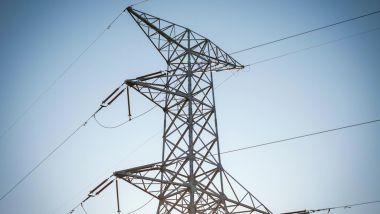
Key among these was the poles-and-wires network, which typically accounted for the biggest share of an electricity invoice.
"We know that economic conditions have put pressure on many Australians and the increases in electricity prices over the past two years have made energy less affordable for many households," Ms Savage said.
"In light of this, the AER has, in this decision, placed increased weight on protecting consumers.
"While wholesale markets have stabilised since their extreme peaks of 2022, this easing has been offset by the pressures we are observing in network prices.
"Poles-and-wires costs are a large component of retail prices, comprising around 40 per cent of the price."
Some Palestinians can now travel to Australia after cancelled visas reinstated but others remain trapped
The Australian government granted 2,273 temporary (subclass 600) visas for Palestinians with connections to Australia between October 7 and February 6 this year, according to figures from the Department of Home Affairs.
That visa type means recipients cannot work or access education or health care in Australia.
However, Last week, some Palestinians who had been able to flee Gaza had their Australian visas cancelled, leaving them stranded in other countries.
Several Palestinians who had their temporary Australian visas cancelled last week are still awaiting clarity from the federal government, though others have had their visas reinstated.
Many were told the government had determined they did not genuinely intend to stay in Australia on a temporary basis.
The ABC has been told additional security and other checks have since been conducted by the Home Affairs department, resulting in some visas being reinstated.
The department did not explain what those additional checks entailed.
The Palestine Australia Relief and Action (PARA) Foundation, which has supported the families of those with cancelled visas, said there were still questions for the government to answer.
Rasha Abbas, the co-founder of PARA, said in eight of the 12 cancellation cases it was managing visas had been reinstated.
The government would not provide the number of visas cancelled and reissued, but said it was a small group.
The department also granted 2,415 visitor visas to people declaring Israeli citizenship during that period.
On Friday, the government suggested the way in which some Palestinians fled Gaza was a factor in their visas' cancellation.
"If people make it out of Gaza without explanation, or their circumstances change in any meaningful way, we will take the time to understand those changes before proceeding," a spokesperson for Home Affairs Minister Clare O'Neil said.
The spokesperson said the government recognised the distress many people in the community were feeling.
"We have made a strong commitment to assisting people who are trying to leave Gaza. But we make no apology for doing everything necessary to maintain our national security," the spokesperson said.
Vladimir Putin wins Russian presidential election with almost 90pc of vote, but large protests spark 'hope'
Vladimir Putin's grip on Russia's presidency has tightened after early results in an election some Western governments said was illegitimate indicated he'd won almost 90 per cent of the vote.
Mr Putin, who has held the office of prime minister or president continuously since 1999, was one of four candidates on the ballot paper, but it was an opposition figure no longer alive who landed the largest blow against him.
Thousands of people turned up at polling stations across Russia, and abroad, to take part in a protest dubbed "noon against Putin" on Sunday, which had been endorsed by the anti-corruption activist Alexei Navalny before he died in custody last month.
While organized gatherings critical of the government are seldom seen in Russia — and can draw harsh jail sentences — the peaceful demonstration involved people simply turning up to vote at the same time to highlight that opposition to Mr Putin exists, even if the official results don't reflect it.
Just after 9pm on Sunday local time (5am AEDT), Russia's Central Election Commission announced preliminary results showed Putin had won with 87.97 per cent of the vote.
The White House immediately issued a statement saying the vote was "obviously not free nor fair", while Ukrainian President Volodymyr Zelenskyy, whose country is at war with Russia, said the vote was illegitimate.
Many international observers have described the election as a sham, arguing the results are manipulated, the country's state-run media peddles only pro-Putin propaganda, and that the most high-profile opposition figures are barred from running.
One of them, Boris Nadezhdin, drew a large crowd when he turned up to cast his ballot at a polling booth on Moscow's outskirts on Sunday.
His anti-war platform had begun to gain traction with younger voters in particular, before Russia's electoral commission disqualified him several weeks ago, citing irregularities in his paperwork.
Maria Pevchikh, the chair of the late opposition figure's Anti-Corruption Foundation, told the ABC the people taking part in the noon protest inside Russia were "heroes".
She urged people not to give up hope for Russia's future, despite the fact Putin had extended his reign.
Mr Navalny, who survived a poisoning attempt in 2020 last year, has been announced dead by the Arctic penal colony where he was being held.
Mr Navalny's wife, Yulia Navalnaya, voted in Berlin, and described Mr. Putin as a "gangster" and told reporters “One day we will win".
Â

Stamp duty is holding us back from moving homes — we've worked out how much
If just one state of Australia, New South Wales, scrapped its stamp duty on real estate transactions, about 100,000 more Australians would move homes each year, according to our best estimates.
Stamp duty is an unquestioned part of buying a home in Australia — you put your details in an online mortgage calculator, and stamp duty is automatically deducted from the amount you have to contribute.
The 2010 Henry Tax Review found stamp duty was inequitable. It taxes most the people who most need or want to move.
The review reported:
"Ideally, there would be no role for any stamp duties, including conveyancing stamp duties, in a modern Australian tax system. Recognising the revenue needs of the states, the removal of stamp duty should be achieved through a switch to more efficient taxes, such as those levied on broad consumption or land bases."
In 2011, Queensland hiked stamp duty for most buyers by removing some concessions for owner-occupiers at short notice.
For owner-occupiers it increased stamp duty by about one percentage point, lifting the average rate from 1.26 per cent of the purchase price to 2.27 per cent.
With NSW stamp duty currently averaging about 3.5 per cent of the purchase price, our estimates suggest there would be about 25 per cent more purchases and moves by home owners if it were scrapped completely. That's 100,000 moves.
Victoria's higher rate of stamp duty, about 4.2 per cent, means if it was scrapped there would be about 30 per cent more purchases. That's another 90,000 moves.
When someone buys a home, they typically front up much less cash than the purchase price. While stamp duty seems low as a percentage of the purchase price, it is high as a percentage of the cash the buyer needs to find.
If the deposit takes five years to save, stamp duty makes it six.
Averaged across all Australian cities, stamp duty costs about five months of after-tax earnings. In Sydney and Melbourne, it's six.
This cost has steadily climbed from around six weeks of total earnings in the 1990s. It has happened because home prices have climbed faster than incomes and because stamp duty has brackets, meaning more buyers have been pushed into higher ones.
Replacing the stamp duty revenue that states have come to rely on would not be easy, but a switch would almost certainly help the economy function better.